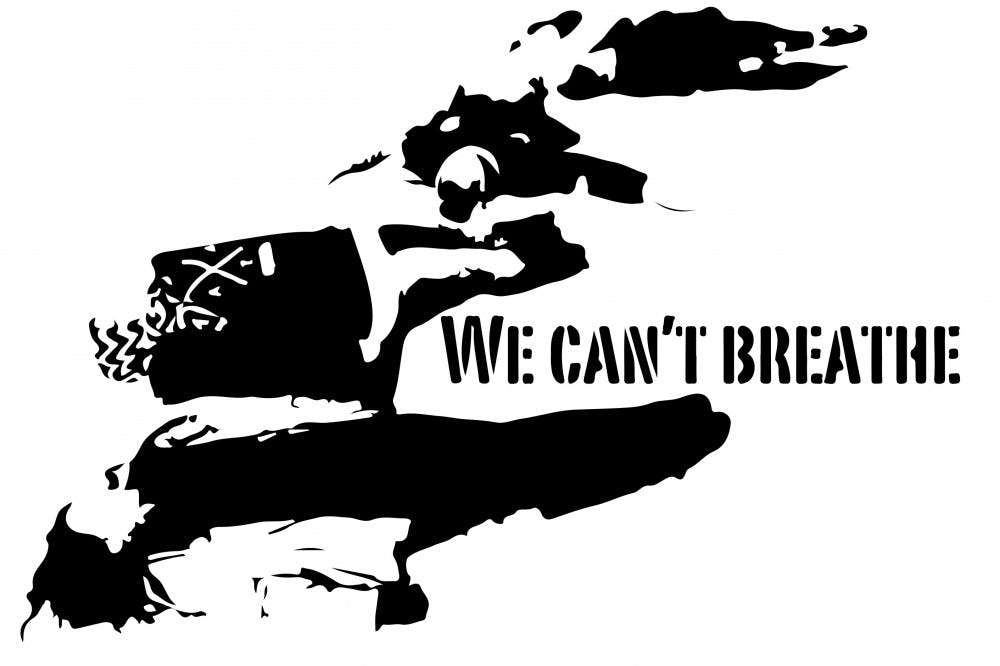
IU students joined a national movement last week in protesting against a grand jury’s decision to not indict police officer Darren Wilson for the death of Michael Brown.
Students gathered at Showalter Fountain to listen to members of the Black Student Union speak on recent violence and unjust police killings.
Students then marched to the Indiana Memorial Union to participate in a die-in. Students lay on the floor of the Union for four and a half minutes, a representation of the four and a half hours Michael Brown’s body lay on the street. Afterward there was a discussion group led by members of the BSU.
The rally on IU’s campus demonstrates the student body standing in solidarity with the protesters in Ferguson, Mo.
It signals that IU students, too, believe an injustice was carried out at the expense of a life.
Although the possibility of a criminal case against Wilson is no longer an option, the death of Brown has resulted in the nation taking a hard but ultimately positive introspective look at what exactly lines the fabric of American society today.
In the wake of Brown’s death, alleged instances of police brutality have assumed a place in the spotlight.
Data gathered by the Reno Gazette-Journal has revealed that excessive force used by law enforcement in apprehending African Americans had been occurring for years and at alarming rates.
In Ferguson alone, USA Today reported black residents are three times more likely to be arrested than people of other races.
The systemic discrimination practiced by law enforcement has also reignited the conversation of race in the United States.
Although race as a form of categorizing individuals has been proven to have no scientific basis, the U.S. continues to group Americans under the arbitrary labels of black and white.
Despite the progress made to improve race relations in the last century, the death of Brown is a stark reminder that there is much more work to be done in order to make this country free and equal for all.
Brown’s death has illuminated a myriad of issues within American society today.
We feel that discussing these issues in public forums is essential to reversing the trend of brutality and racism in the U.S.
It is important to discuss these issues to begin changing the trend of discrimination among the American people. Though the law may alter the manner in which such cases are handled in the legal realm, it is the public who must take the initiative to change the attitude toward police brutality and racism from one of indifference to one of intolerance.
The case of Michael Brown is not the first or the last wrongful death committed by a police officer in the U.S.
However, through rallies at IU and other sites across the nation, the American people are sending a message that Brown’s life was not lost in vain and that the current discussion will change the status quo.