The Palestine-Israeli conflict in the Middle East has raged for the better part of the 21st century.
The recent operations on the Gaza Strip have been the latest in a long line of violent social, political and religious tension.
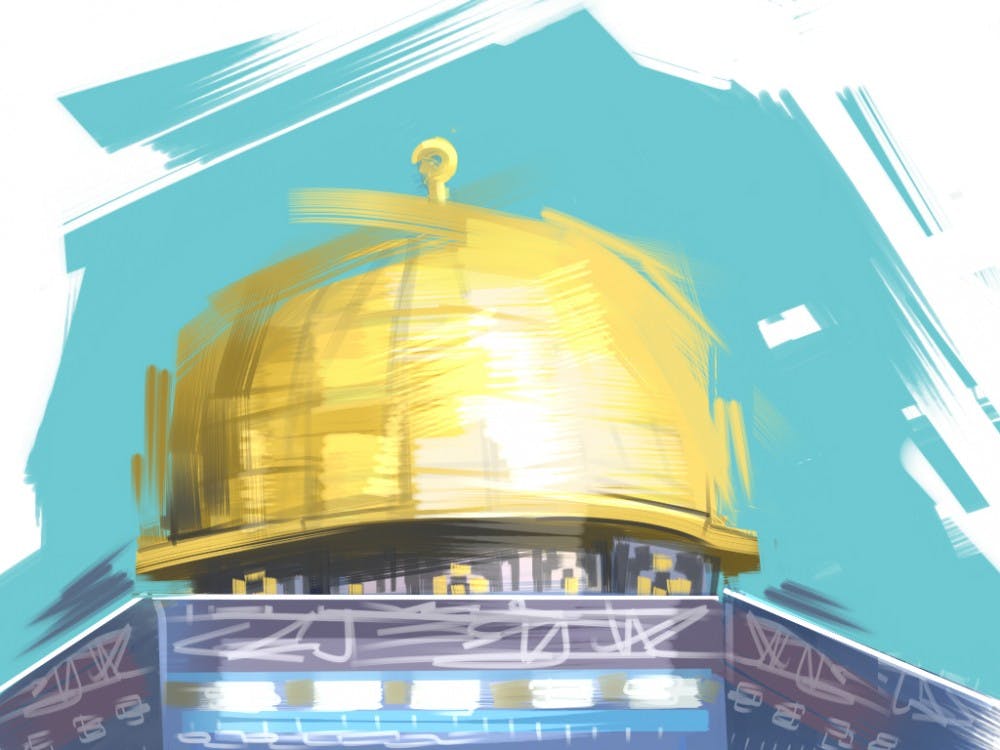
In Jerusalem, one of the most controversial religious sites, the Temple Mount or Noble Sanctuary, famous for its gold dome, was closed, re-opened, and closed again because of increased ?Muslim-Jewish tension.
The closings themselves are rare and extreme and, given how tense and violent the area has become in the last few years, we question the policies of the site itself.
What is happening in Jerusalem is a microcosm of the larger Palestine-Isreali conflict, which has deep roots in political incitement and ?religious intolerance.
If the city itself were more universally accessible, we believe it would aid and abet the violence in the ?surrounding area.
The site was closed first after the attempted assassination of Yehuda Glick, a right-wing rabbi who wants to expand Jewish access to the Temple Mount. It is one of very few sites in Jerusalem that does not allow universal ?worship.
The second was after a driver drove through a crowd outside of the site. Some are alleging it was a terrorist attack.
After the first closing, Palestinian leaders declared a “day of rage,” protesting both the closing and the alleged killing of a Palestinian man by Israeli forces after Glick was shot.
Amit Boukai, President and founder of Students Supporting Israel, spoke about the sites closing. Boukai explained that the reason there is a strict ban on non-Muslim worship, even now, is that if someone were seen praying differently, there is a fear it would incite so much anger that there would be violence and riots.
“Rioting in East Jerusalem has been very high recently,” she said. “I believe, regarding Temple Mount, was that it was ... an attempt to delay the repercussions of the rioting.”
Boukai explained that easing tension in Jerusalem would increase the chances of easing overall tension between Israeli and Palestinian groups.
In 1967 Israel seized control of East Jerusalem and the West Bank but gave control of the site to the Islamic Waqf, a group from the Hashemite kingdom of Jordan to ease the violence the seize caused. Since that point, non-Muslim worship is strictly banned on the site’s grounds.
It is a place of extreme religious significance to both ?religious groups.
Jewish tradition says the dust on which the site was built was made to create Adam, and it is where Abraham nearly sacrificed his son Isaac to prove his faith to God. For Muslims, it is where the Prophet Muhammad ?ascended to heaven.
It is one of the holiest sites in Judaism, one of the three holiest in Islam and even has Christian significance, as Jesus worshiped there.
The history of the place, both ancient and modern, and the recent assassination attempts, have caused problems that are direct reflections of the larger religious and ?political conflict in the area.
While there are other social and political reasons for the tension in the Palestine-Israeli area in and around the Gaza Strip, the religious significance of the war cannot be underestimated or undervalued. It is a deeply religious conflict in a deeply religious area.
If the site were finally reopened to worship for those other than Muslims, it might help ease some of the tension in the area.
It wouldn’t get right of Hamas, the main Palestinian resistance group, and it wouldn’t prevent reactionary Israeli violence on ?Palestinians.
Perhaps, if the two religious groups opened the most controversial site to universal worship, it might engender an environment of understanding rather than hostility.