
Change seems to have been IU’s motto the past several years.
Administrators’ plans have directed the University toward new paths, and new schools have been formed as older ones consolidated.
Administrators are at the forefront of these changes, standing on podiums and before committees, explaining the University’s new direction to the IU community.
The voice of the student, however, remains in the background.
The newest batch of these University-changing documents is the IU-Bloomington Campus Strategic Plan.
The document is meant to carry the University into the next century, meaning big changes for the administration, faculty and students.
On the list of 167 individuals who were part of the Strategic Planning Committee, only six were students: four undergraduates and two graduate students.
These committees were each responsible for writing reports that led to certain sections of the Strategic Plan.
For instance, the Graduate Education team wrote a full report on the needed changes to the graduate experience at IU, which became the foundation for the Graduate Education section in the Strategic Plan.
Ronald Arruejo, a master’s student in the School of Public and Environmental Affairs, was one of two graduate students involved in the process.
The other graduate student, David Breed, was unable to attend any of the Strategic Plan meetings due to conflicts with his class schedule — he was kept abreast via email, Arruejo said.
Arruejo served on the Graduate Education team, offering input and comments where he could.
“Basically, on some issues they solicited my opinions because I am the only one that would know about it,” he said.
Arruejo said international education and diversity retention were two areas he was able to contribute to during his committee meetings.
While he missed the first five meetings because of a late appointment as the Graduate and Professional Student Organization treasurer, he said he soon felt like part of the group.
“I was there more on the commenting side,” he said. “They were able to incorporate my ideas, but I wasn’t the one actually writing the final words that you see on the provost’s plan.”
Executive Vice President and Provost Lauren Robel spoke on the Strategic Plan at faculty meetings, a campus town hall meeting and her State of the Campus address. Each time, she emphasized the importance of public comment.
“The need to have students involved in something like this is just really obvious,” she said.
A small council of administrators and faculty chose the student team members for the Strategic Plan, Robel said.
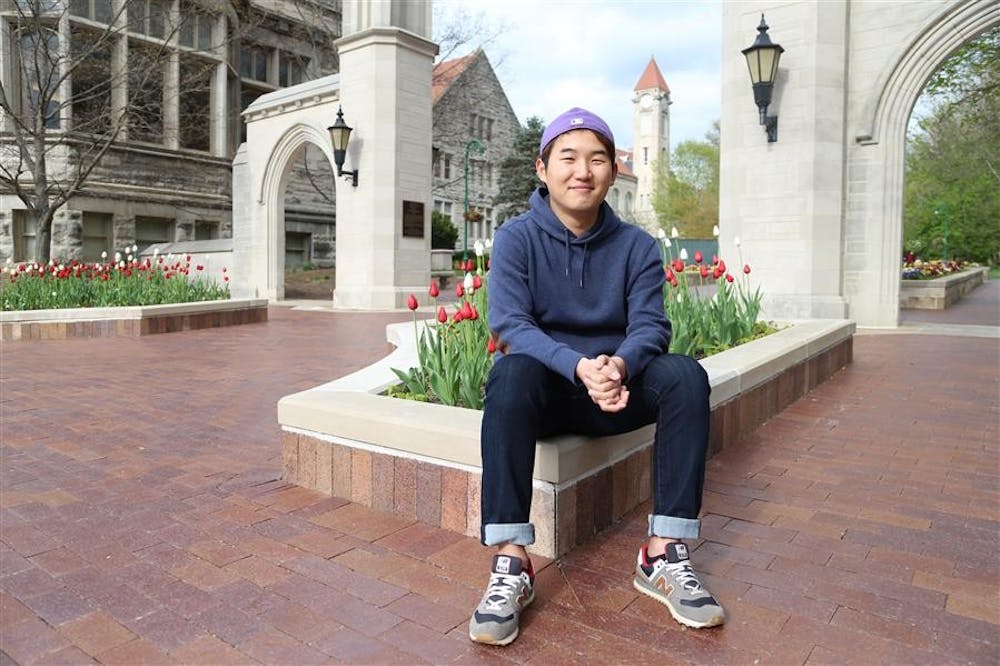
When senior Gene Kim contributed to the Undergraduate Education team, he sat in a room packed with professors and administrators. Only two other students could be looked to for support on student views. Kim was the only international student.
“They need some student input when they form plans and all those kinds of things, but it was difficult for me to contribute my perspectives onto that process,” he said. He attributed this difficulty to the large number of “experts” on the committee.
As an international student from South Korea, Kim originally wanted to be on the International Initiatives: Students team, but he was told his perspective was needed in the Undergraduate Education section. No students were on the International Initiatives: Students team.
“When we tried to form plans specifically for international students and how they should be involved in student organizations, per se, I had to provide some extra information to professors, because they don’t know much about what international students on campus are going through,” Kim said.
He said he was happy with his part in the plan but, looking back, he wished there had been more international student input in his committee.
“I think this is a rare opportunity for me to be involved,” he said.
In addition to those six students who directly worked on the Strategic Plan, Robel said she worked to reach out to multiple student groups.
On a campus of more than 40,000 students, Robel directly spoke to 322 students outside of the committee, according to a document from her office.
This included a total of 41 students who gave input on the Undergraduate Education section. Those students were a part of IU Student Association and the Deans Advisory Council.
This number also includes the 45 graduate students at a GPSO meeting whom Robel spoke to as part of additional outreach for the plan.
Arruejo said he was satisfied with what he contributed and the document his committee produced, but he did wish there was a louder graduate student voice in the committee.
“At minimum, I wish there was another graduate student that was actually a doctorate because they have very different needs than a professional student,” he said.
Arruejo said he would have liked one graduate student in the humanities, one from the sciences and one each from a master’s and doctoral program — at least three in total.
While the Strategic Plan is far-reaching across campus, IU has also changed at the school level.
In cases of school mergers, such as the School of Library and Information Sciences becoming a department within the School of Informatics and Computing, students had to work to voice their opinions.
In 2012, when the SLIS merger was first announced, Anand Kulanthaivel was in the middle of completing a master of information science through the school.
By the time he graduated in 2013, SLIS was no longer a school, but a department.
Student voice was minimal, he said. Most of what SLIS students contributed went through the faculty.
“I wish there were more opportunities for student input,” Kulanthaivel said.
While he said the school and faculty created a very open atmosphere, he thought student input in the merger could have been improved.
As students were given updates on the merger, Kulanthaivel said the SLIS students realized there wasn’t much they could do.
“So much of it was set in stone already,” he said. “We felt pretty helpless.”
Students in the School of Journalism had more opportunity to voice their opinions about the school merging with the Department of Communication and Culture and the Department of Telecommunications to form the Media School.
Bari Finkel, a senior in the journalism school, is part of the Journalism Student Advisory Board, a group that advocates for journalism students as the school becomes part of the new Media School.
“This entire operation takes so many people, and I think the student voice is probably the most important voice in this,” Finkel said.
She said there have been disconnects between students and administration outside of the journalism school and disconnects between the students of telecommunications, communication and culture and the journalism school, but it hasn’t slowed down the board.
“I think that the student voice is invaluable in all of the categories because we’re the ones who are going through the programs now, and we’re very conscious of our education,” she said.
The advisory board has put together reports about what the students want to see in The Media School, including space for student media, improvements to the senior capstone and a mentor program, Finkel said.
The board has also started to work with CMCL and telecommunications students to advise on a Media School-wide level.
The Journalism Student Advisory Board will continue to contribute to the changes brought about by the Media School next year, Finkel said. And it should be in place for at least the first few years of the new school.
“I think this is really the right step for IU,” Finkel said. “I think it is going forward in a way that other colleges aren’t and it’s really impressive, and I’m excited to be a part of it. But it’s also scary to be a student among all of this because we know that there’s a possibility we won’t be listened to.”
Student voice minimal in major changes
Get stories like this in your inbox
Subscribe



