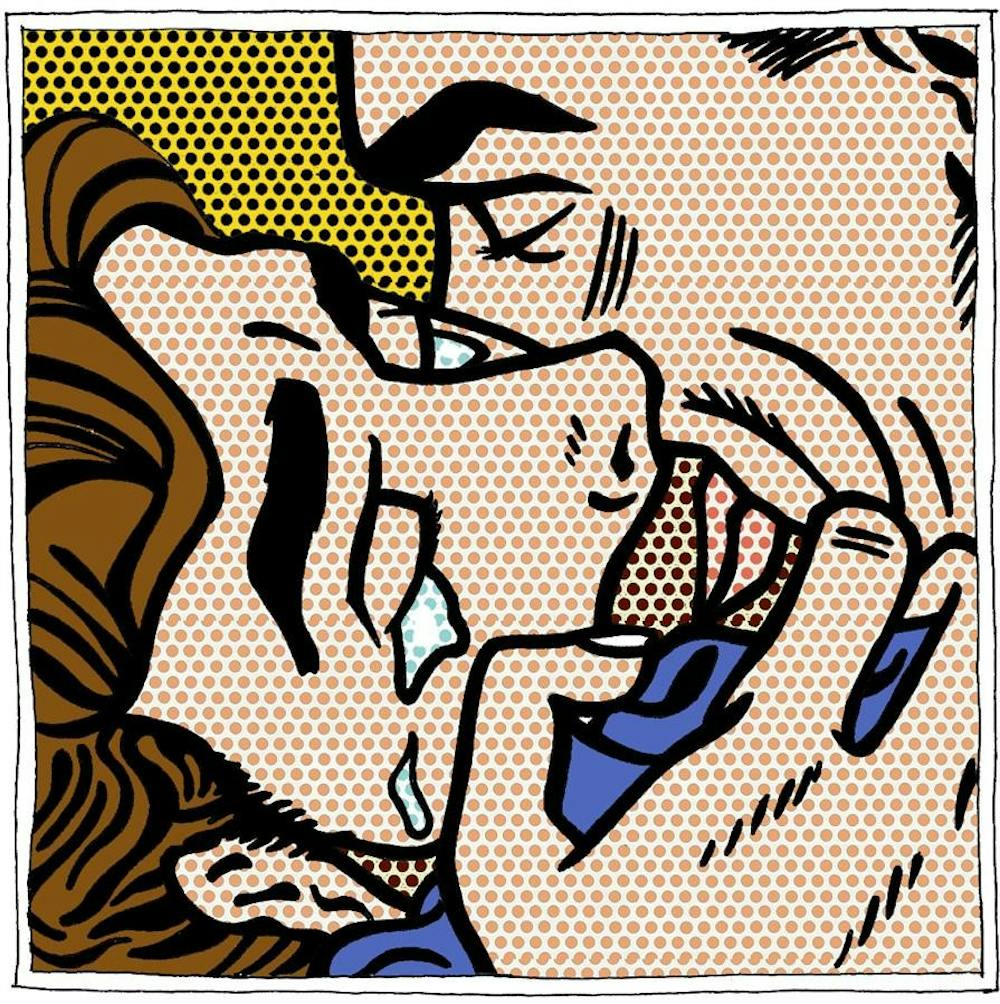
It’s safe to say that comic books have always been ambitious and unflinching in their representation of LGBT characters. I just wish the rest of the world would pick up on the cue.
Here’s a recent update on the gay comic book hero front. Hercules and Wolverine share a kiss in an issue of Marvel’s “X-treme X-men.” After vanquishing “the worst monster who ever threatened the dominion of Canada,” they declared love for each other in the heat of an alternate universe.
Batwoman finally asked her leading girlfriend Maggie Sawyer to marry her, multiple comic book heroes have been nominated for the 24th annual GLAAD Awards and anti-gay comic book artist Chris Strause has withdrawn from the latest Superman series because the backlash from the outspoken LGBT community was just too fierce to continue.
If more than 60 superheroes identify as LGBT in the comic realm, it’s remarkable to me that we can’t find queer heroes in other media.
The entertainment industry fails to pick up TV adaptations and movie scripts with the queer hero pitch.
This might be due to the risk factor, or possibly because the gay demographic is such a smaller consumer niche.
What they’re forgetting is not only is the comic book consumer both in paper and for the big screen fiercely loyal, but America just loves an underdog.
The development of the gay superhero market could be incredibly successful, because comic bookies show up to premieres hours early, they see the movie dozens of times and they promote it doubly over in their various blog media and comic conventions across the United States.
Even the low-grossing superhero-movies “Green Lantern” and “Hulk” cruise in with a cool $116 million and $132 million, respectively.
Why? Because we love heroes, and oftentimes, we need them to believe in ourselves.
If we developed a new breed of underdog hero, in the light of a little guy known as Spider-man (among countless other “underdog” alter egos), perhaps the gay community members could believe in themselves a little bit more.
This is cowardice on Hollywood’s part. If we have yet to explore this new niche, how can producers know it will be unsuccessful?
More importantly, why should it matter? Gay narratives have obviously braved the movie industry and crossed the finish line with flying colors and Academy Awards. By ignoring queer heroes, we’re missing out on something.
The queer hero has the opportunity to move beyond the stereotype — the foppish, limp-wristed emasculation — and breach new territory in external, dangerous conflict.
A new kind of masculinity can come forth, a “homomasculinity,” if you will.
With this homomasculinity, not only could the narrative exist outside hegemonic or homophobic systems that foreclose on the narrative identity of a gay protagonist, but through the context of adventure — of superheroes — gay people could be removed radically from their subordinated stereotype.
By fostering this new masculinity, the warrior-type could be reevaluated.
No longer does he or she have to solely be the physically fit killing machine, but this superhero could be an amalgamation of masculine physicality and queer bravery — embodying the feminine sensibility that puts us in touch with the acceptance of ourselves and the embrace of our non-majority orientation.
I’m writing my thesis on queer heroism in adventure genres, so I could talk about this forever.
You should tune in after spring break to hear more about how we can advance to the gay guy wearing the cape and saving planets.
— ftirado@indiana.edu
We need more queer heroes, part 1
Get stories like this in your inbox
Subscribe