Everyone watch out, because we’re one step closer to reading each other’s minds.
OK, that might be an exaggeration. But this week, teams of collaborating researchers in Natal, Brazil and Durham, N.C., accomplished something that would have sounded like outrageous science fiction even one or two decades ago.
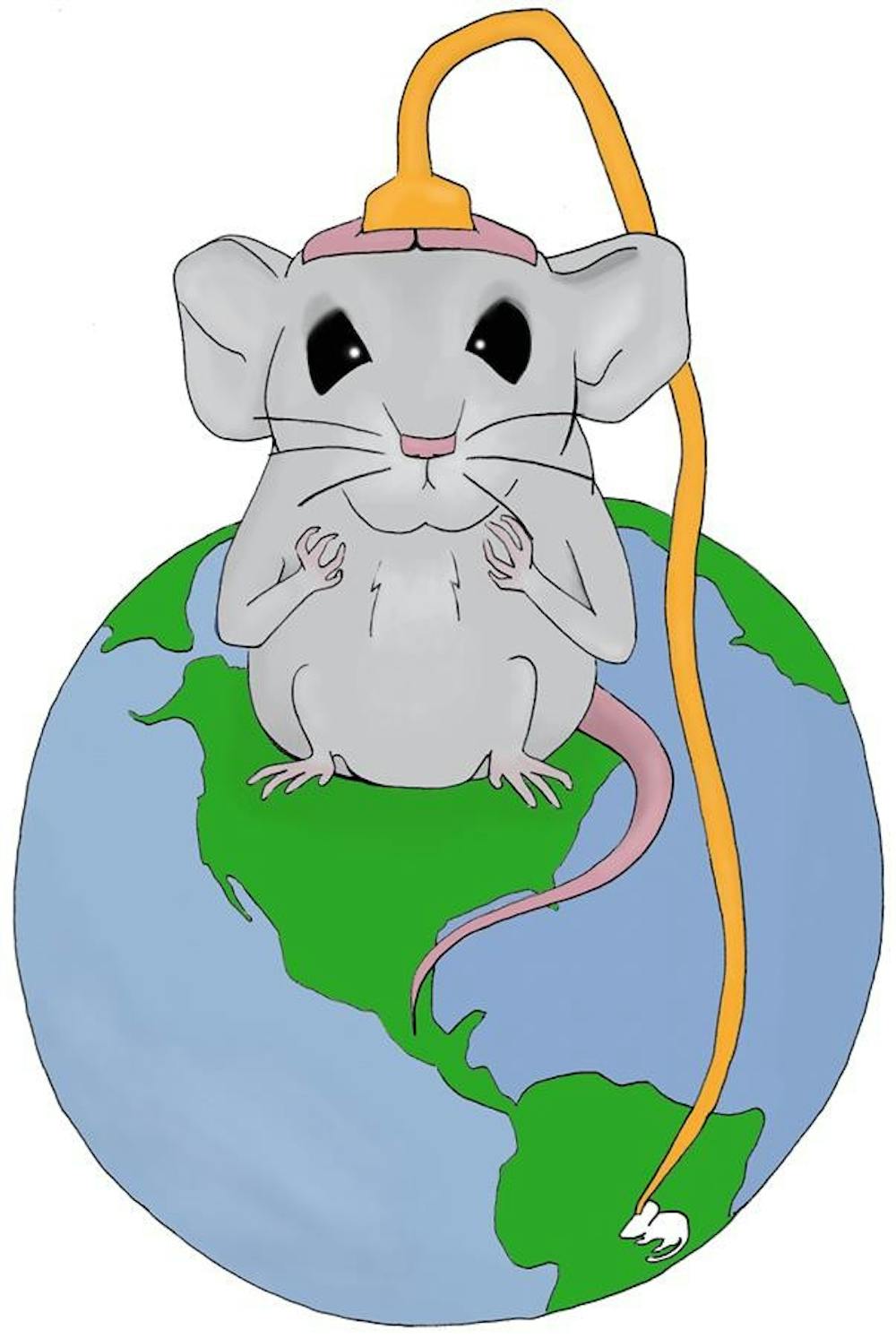
A rat in the Brazilian lab was taught a simple task in which he learned which one of two levers he should press to receive a reward.
The choice was cued by the width of the door through which he moved. This rat had electrodes implanted in his motor cortex, a part of the brain responsible for executing voluntary motor actions.
The output from these electrodes was routed through a computer and the Internet and was received by the lab in Durham.
The electrical signals were then used as the input for electrodes connected to a second rat’s motor cortex. The latter rat then faced the same two-lever task as the former but was untrained.
The results are quite impressive. The American rat learned the task, solely from the neural signals he received from his Brazilian counterpart.
The future directions of this brain-to-brain interface research are intriguing, and we applaud such mind-bogglingly creative scientific exploration.
It’s important to remember that this does not mean humans will be able to connect their brains and share thoughts. The rats relayed only sensorimotor information that helped form general behavioral patterns.
Not only is it much more difficult to insert electrodes into the brains of moving, living humans, but also the neural components of thoughts and memories are infinitely more complicated and much less understood than what was transmitted in this experiment.
The practical applications for this research are still not totally clear, but these brain-to-brain connections, described by the principal researcher as “functional linkages,” might be advantageous for sufferers of paralysis and other muscular dysfunctions.
The technique used is not only possible for direct communication between two subjects, but also could be used to connect several brains to form an “organic computer,” which might be a new approach to efficient problem solving.
Scientists are interested in investigating what could be accomplished by such a network formed by integrating the information from many collaborating brains.
More will become clear as the research progresses, but we find the possibilities exciting.
We strongly encourage further research in this fascinating new realm of neuroscience, and we are excited to see what practical findings come from it.
Real-life science fiction
Get stories like this in your inbox
Subscribe