Just like that lover who spurned you that can’t seem to get out of your head, Indianapolis just can’t quit the idea of mass transit.
After more than 7,800 Hoosiers signed a petition in support of it, the Indiana State House of Representatives Roads and Transportation Committee approved House Bill 1011 on Wednesday morning, in support of at least giving Indianapolis residents a choice about mass transit in their city.
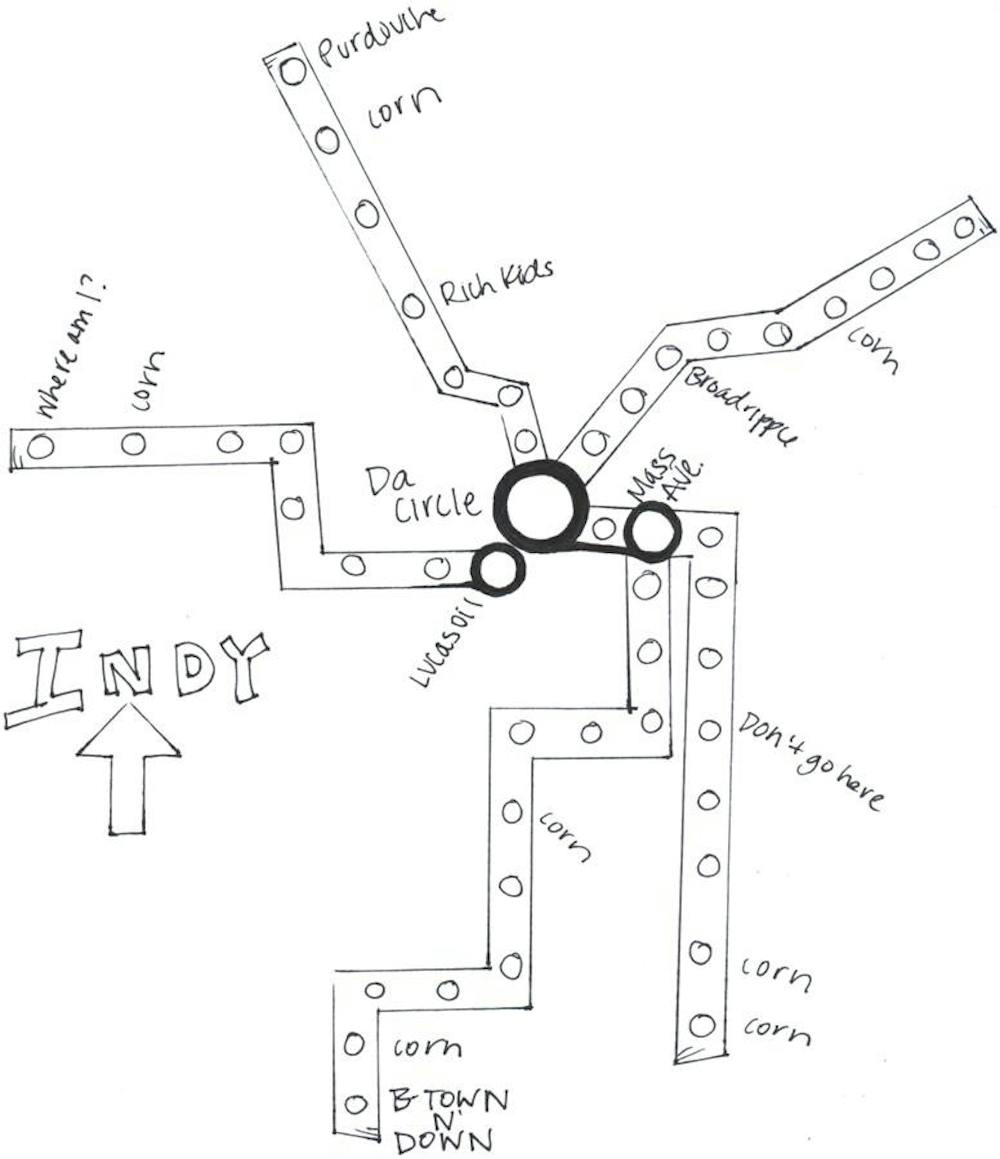
The bill still has to go through the House Ways and Means committee, where Indiana Representatives will essentially be voting whether to let residents vote in a referendum on the issue. Specifically, the bill calls for doubled bus routes, the creation of express bus routes, and the implementation of a light rail system, both between parts of Indianapolis proper and between the city and its suburbs.
The cost of this expansion to transportation would be somewhere around $1.3 billion, and federal funding would only cover about half of that amount. The referendum proposes a tax hike of about 0.3% on Marion and Hamilton counties to pay for the remainder of the infrastructure improvements.
We’re hopeful the bill will pass without a hitch.
And if it comes down to a vote, we urge residents of Marion and Hamilton counties to ask themselves: is 0.3 percent really that much?
Although it’s the 13th-largest city in the United States, Indianapolis is consistently ranked 40th or less when it comes to mass transit options.
Indy is an odd city in that its population is much more spread out than other comparable metropolises. For a city of roughly 785,000 people, Indianapolis technically covers 365 square miles. It’s a blessing and a curse, and an excuse many use for why we don’t need or shouldn’t have mass transit.
We argue the opposite.
A spread-out city, ridden with urban sprawl like Indianapolis, needs mass transit even more than a compact one.
If you’ve lived in Indianapolis, you’ve realized, even through simple observation, that IndyGo, Indianapolis’ much-maligned bus system, isn’t doing much. Its routes are inefficient and seemingly never on time. Those expecting to catch the bus are often forced to wait for an hour at a time, or sometimes more.
And when IndyGo doesn’t work, many Indianapolis residents don’t work.
Transportation is expensive and hard to wrangle, especially for poorer residents. Increasing mass transit options in Indianapolis would present more employment opportunities to those who may have before felt monetarily restricted to their cheaper suburb or neighborhood in the city.
Most Indianapolis residents are forced to have cars, because it’s almost impossible to live in the city otherwise. But what about the young and the poor? In metropolitan areas, mass transit is the best friend of the young adult and the low-income worker. The same could be said for Indianapolis if we eventually get our act together.
Indy also needs better transportation infrastructure to keep it economically and culturally relevant. Young people are no longer passionate about having cars and commuting every day. More of us are choosing to live in places where cars aren’t necessary. Although the city recently implemented bike lanes, a few lines on the pavement here and there aren’t going to cut it.
Indiana already struggles with a “brain drain.” Almost half of its college graduates leave the state annually for greener pastures. If we want to keep our grads, and even attract bright, young talent, we need to make our capital city an attractive place to live.
Our current reliance on cars, uncontrollable urban sprawl, and absolute lack of other transport options isn’t the best public image.
Mass transit solves so many problems for Indianapolis. It has the potential to both pull current residents out of immobilizing poverty and attract future residents who could boost the local economy by bringing higher education, specialized skills and, quite frankly, youth.
It makes us look progressive to a nation that often thinks of us as backwards. And we’re going to have to implement it eventually, unless we want to be an aging and irrelevant population, left in the dust.
Why not now?
For everything that mass transportation would bring to the city, is 0.3 percent really too high a price to pay?
Indianapolis needs better transportation
Get stories like this in your inbox
Subscribe