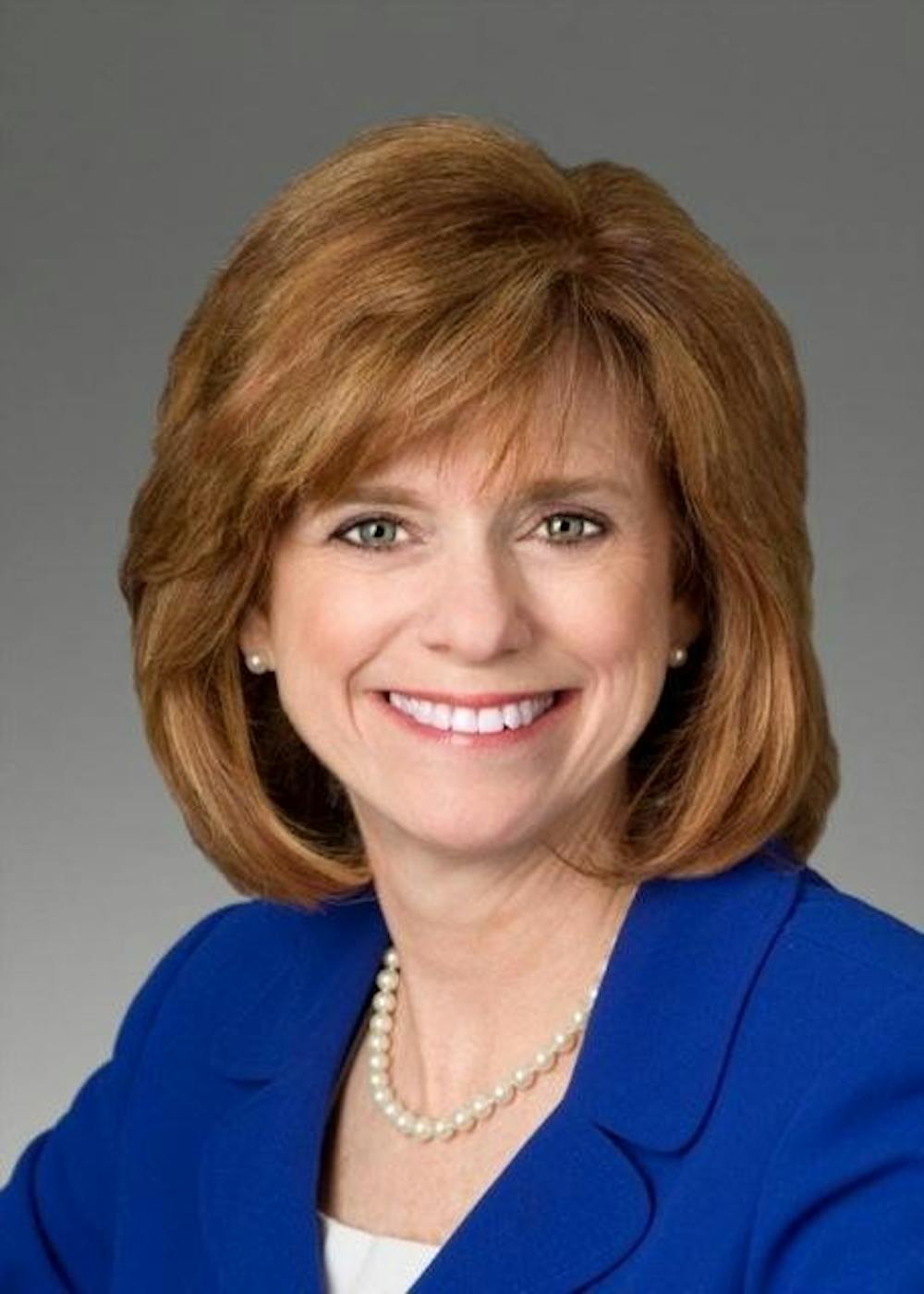
Indiana House of Representatives, District 60
Currently up for re-election and works in the cancer unit of IU Health Bloomington.
Welch graduated from Mississippi College in 1977 with a BS in education. She completed prerequisites for nursing school at IU and later earned an associates degree in nursing (RN) from Ivy Tech Community College in 1995. She has worked on Capitol Hill as a legislative aide, as a substitute teacher, a childbirth educator, a probation officer and served as the first director of the Monroe County Community Corrections Program.
"I have had the privilege of serving as the state
representative for the citizens of District 60 for 14 years. I believe a
legislator has three responsibilities: to help move forward public
policy that positively
affects the citizens of the district; to be an advocate for the
citizens with their state government; and to help educate the citizens
to better understand their government. It is a privilege to be given
ideas by citizens regarding laws that should be instituted,
amended, or eliminated and then take those ideas to the Indiana General
Assembly and attempt to move them forward. It is also a privilege to
use the position as a state legislator to intervene for constituents
when they have problems with state agencies.
And I love spending time in our classrooms and with civic groups
explaining the legislative process and answering questions about public
policy issues considered by the General Assembly."
"A matter that must keep the General Assembly’s
attention is how to retain and create jobs in Indiana. Government does
not create jobs, but government can be a partner in the use of tax,
employment, education, and
health policies to promote economic growth and prosperity. I was
recently honored with a national award for my work to help small
businesses, especially with legislation to provide access to critically
needed capital. Other ideas: invest state dollars into
capital projects (IU and Ivy Tech); use House Government Reduction
Committee (I’m a member) to eliminate unnecessary laws that impede
business development; improve efficiency of business/government
interactions (unemployment claims, job certifications, project
bidding); employ new tax incentives for investments; require sales tax
equity for brick/mortar businesses; facilitate regional economic
collaboration; use innovative employment concepts, such as
work-sharing."
— Matthew Glowicki
— Matthew Glowicki