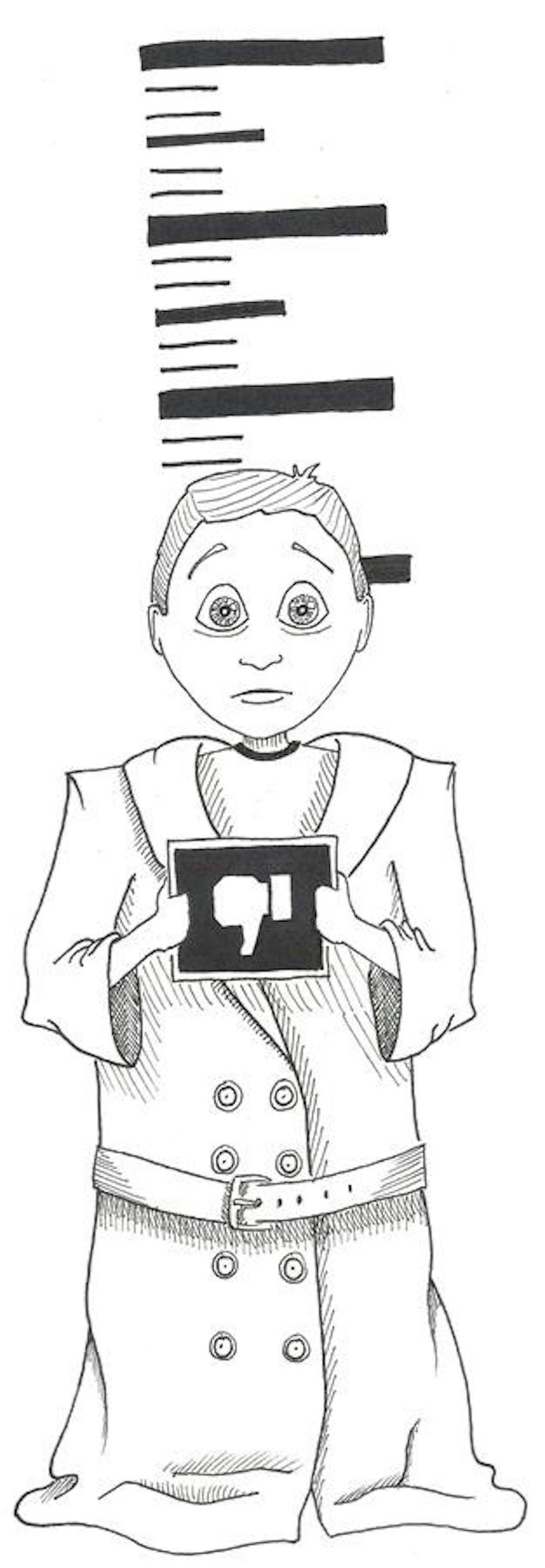
In an age of virtual snooping, overcriminalization and zero-tolerance policies, we should not underestimate the potential for police and school administrators to overreact to students’ online posts with disciplinary action.
Last week, a 15-year-old student at Center Grove High School in Greenwood, Ind., used his Facebook wall to swear at his teacher and write, “Something bad is gonna happen tomarrow.”
Unsurprisingly, he received a night in juvenile detention and now faces the possibility of being expelled.
This incident provides a case study on when speech loses protection and how far into one’s private life a school can reach.
Cursing someone’s name or making a statement of ominous character surely do not constitute threats by themselves.
Viewed together — and with the addition of a 12-year-old student’s comments that he wanted to “help” and had access to a gun — construct a context that propels the statement into a gray area.
Do the words form a credible threat or a tasteless joke?
By Facebook’s virtual virtue, we lose the ordinary verbal and visual cues that could otherwise help us make that determination. Following a shooting, the boys’ words would surely be seen as an obvious warning sign tragically ignored.
So, at the risk of shaking our heads at our own blindness in the aftermath of another massacre, it was not unreasonable for police to make a judgment call to question the students when the parents of a frightened classmate dialed 911.
That investigation revealed a significant difference in intent between the two boys.
According to investigators, the 15-year-old wanted to insinuate he would resort to violence in order to scare people, while the 12-year-old thought the entire matter was a joke.
While it is usually a reach for a school to expel a student on account of online comments, when those comments reveal a clear intent to threaten the safety of others in the school environment, the expulsion is justified.
Online expression carries the same protections and obligations as other forms of expression, but it often lacks the benefit of readily discernible tone and intent.
When speech reaches the precipice of protection, the inability to convey those elements can make the difference between the sound of crickets chirping and the blare of police sirens.
— opinion@idsnews.com
Overreaction of proper measures?
Get stories like this in your inbox
Subscribe