
On Saturday, members of the Political and Civic Engagement certificate program discussed the topic of “Internet and Society: Privacy, Freedom, and Security” at their annual issues forum.
The day started with a panel of three speakers: Bob Zaltsberg, editor of the Herald-Times; Fred Cate, professor in the Maurer School of Law; and Chase Whiteside, member of New Left Media documentary team.
Zaltsberg described the ways newspapers have changed. Newspapers have always acted as gatekeepers and decided what the people wanted to read about, he said.
“Who needs gatekeepers when there aren’t any gates or even fences anymore?” Zaltsberg asked.
Zaltsberg noted that everyone can be a publisher now, and it can be hard to know what information is trustworthy, but he likes the idea of individuals being able to publish freely.
“I don’t want the government to decide who can and can’t publish,” Zaltsberg said. “I think information is public for a reason. It helps people to understand their communities.”
Cate said he believes Web users are only at the beginning of a revolution in information, mentioning how new words have been created over the past few years.
“Everything we touch is recording data about us, and we’re volunteering all this information,” Cate said. “Google will predict more about you than you can about yourself.”
He said he thinks the law will always trail technological advances.
Whiteside said Americans spend about eight hours a day looking at some sort of screen, and he’s concerned the power of it to entertain us will overshadow the negatives.
Cate said one-third of employers have said they didn’t hire a college graduate because of what they saw on that graduate’s Facebook.
“You have to understand the risks and opportunities of everything you do,” Zaltsberg said.
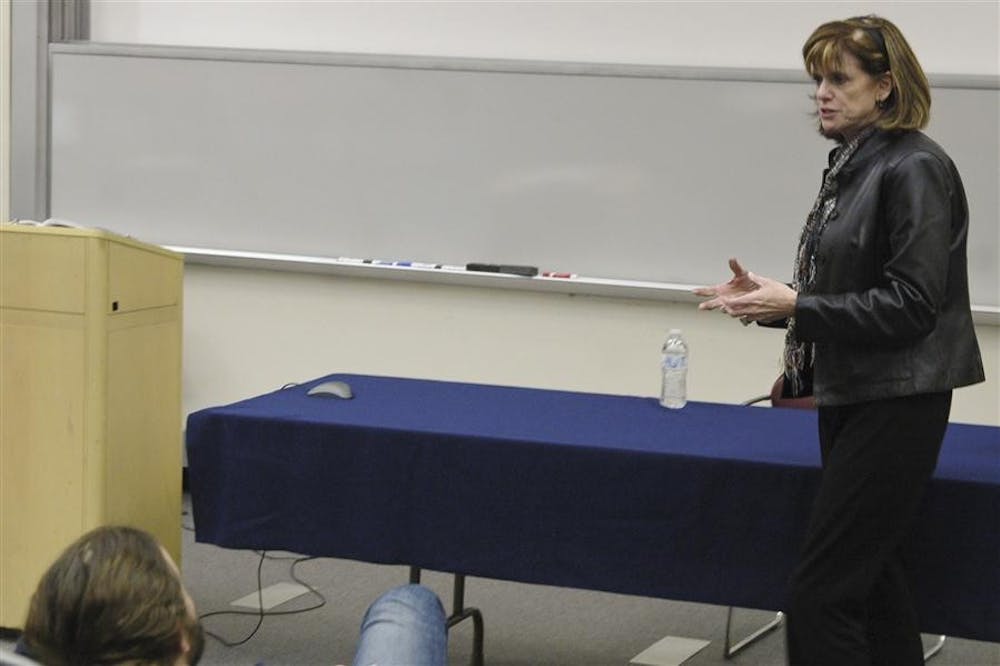
After the panel, the forum broke into small group sessions, one of which was led by Beth Cate, a full-time faculty member in the School of Environmental and Public Affairs and the wife of professor Fred Cate.
Beth Cate asked the group what it thought it might do differently after leaving the forum Saturday.
“I think I’m going to get rid of my Facebook,” one student said.
Another student said people are aware they are sharing their information, but that an issue arises when someone uses it for other purposes. Beth Cate said she could also see the positive side, though.
“There’s a tremendous value of the convenience of accessing information quickly,” she said.
The day ended with a discussion session with Rep. Peggy Welch, D-Bloomington. She said citizens are the most important lobbyists because they have the opportunity to vote. It is important to be involved and engaged, she said.
“You have a voice,” Welch said.
PACE is an undergraduate certificate program any IU student can pursue.
“We focus on bringing theory to practice and preparing effective citizens,” PACE Associate Director Joelene Bergonzi said.
She said the program hopes to help students make educated decisions.
Director Michael Grossberg spoke at the beginning of the panel regarding the origins of the program.
“We created PACE about three years ago to give students an education in democratic citizenship,” he said. “It gives you the knowledge and skill to grapple with the major issues of our day.”
Sophomore Rachael Verhalen attended the event as part of a requirement for the PACE program. Students in the program are required to attend the forum at least once. She said it’s been a great way to put what she has learned to the test.
“The speakers have been really great. It makes you feel a little hopeless, though,” she said. “There’s no clear solution, and it’s hard to come up with something that makes everyone happy, but this has been a really good experience to realize what kinds of rights you are giving up when you use certain websites.”
PACE program educates students about Internet security
Get stories like this in your inbox
Subscribe



