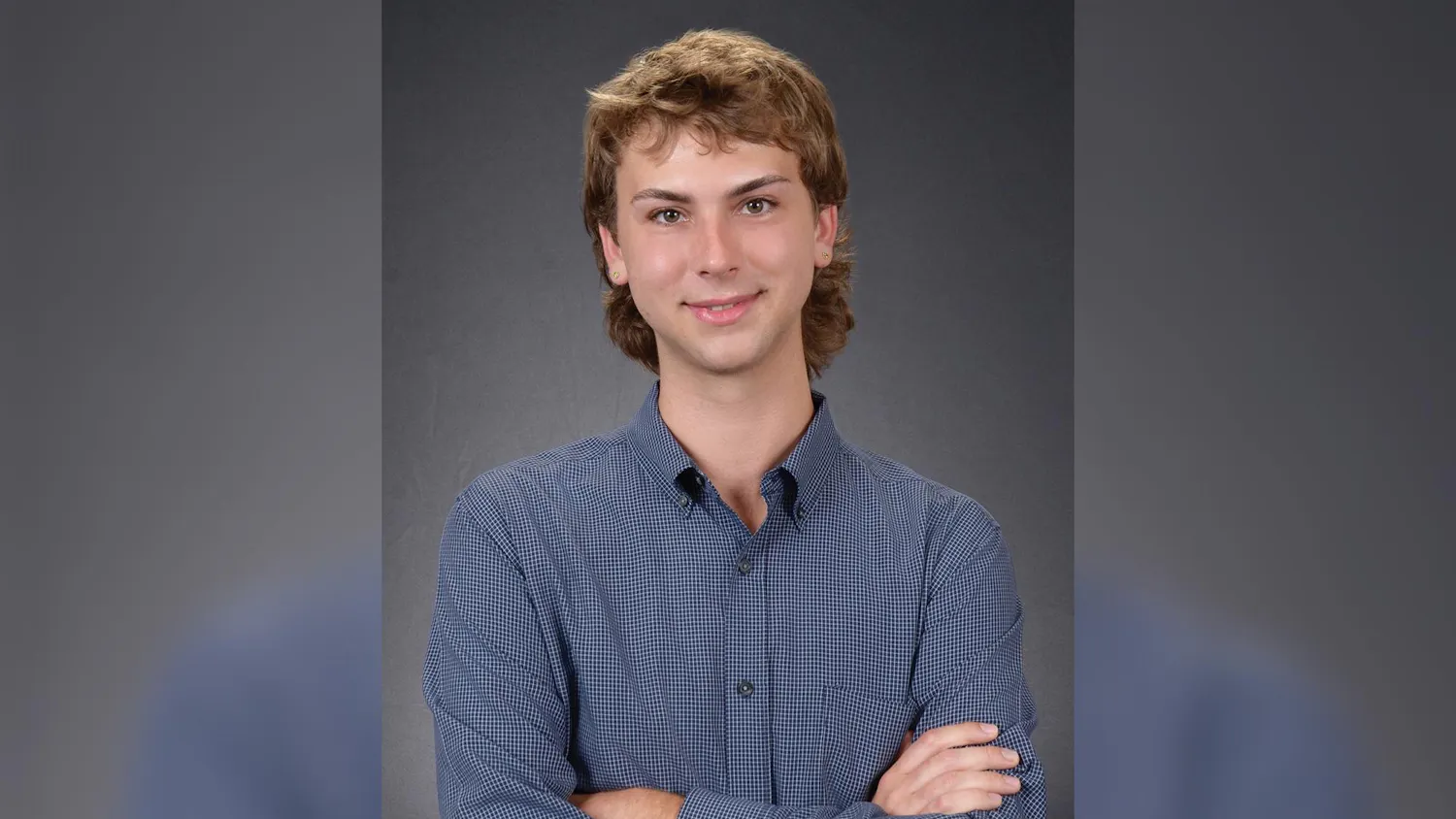
While many IU students spent spring break on a beach, IU Maurer School of Law professor Fred Cate spent time testifying before a U.S. House of Representatives Committee.
The committee, U.S. House of Representatives Committee on Oversight and Government Reform Subcommittee on National Security, Homeland Defense and Foreign Operations, wanted to hear Cate’s views on the Transportation Security Administration and its security techniques.
He called for a renewed mission in the TSA’s use of automated imaging technology currently in place at the nation’s airports, saying Congress must devise a more precise mission for the TSA as well as establish a more effective means of evaluating counterterrorism policies.
Cate criticized the TSA’s continued use of full-body scanners, calling them a relic of a threat that has been subdued.
“If (the TSA’s mission) is to prevent the weaponization of passenger aircraft that occurred so tragically on Sept. 11, 2001, many security experts believe that goal has been reached,” he said in his testimony. “We are literally spending billions fighting yesterday’s threats on the assumption that terrorists are neither smart nor innovative.”
Cate said after his testimony the full-body scanners aren’t detecting anything of great concern.
“We know from a number of studies and anecdotal reports that about one out of three people get pulled aside after they go through the Advance Imaging Technology, and yet we have not detected a single dangerous object,” Cate said.
In his testimony before the subcommittee, Cate called upon Congress to devise a clearer plan for the TSA and a framework for testing the effectiveness of future TSA
policies and technologies.
Had trustworthy evaluations been used to monitor the AITs before their use, Cate argued, the shortcomings of the big investment made in AITs could have been avoided.
“New systems ought to be tested, not just in a laboratory or in a computer simulation, but they ought to be tested in the field,” he said. “When we talk about effectiveness, there are almost always two questions. One is, does the machine work? Does it actually detect what it says it detects? And the other question is, does it work in practice?
Despite his rigorous denunciation of present TSA policy concerning the use of AITs, Cate never called for a complete abandonment of their use.
Fliers with metal body parts could have the option of using AITs instead of setting off a metal detector every time they pass through security as an alternative to being manually wanded by TSA agents, he said.
Cate also sees AITs serving an important role in investigating possible fliers who might pose as a security concern. TSA agents might receive information about a flier and use AITs to scan individuals who are believed to be carrying harmful items with them into the airport.
The TSA began incorporating AITs in the nation’s airports in 2007, according to its website, and since then has drawn considerable levels of criticism on the grounds of inadequacies and the allegedly questionable constitutionality of present TSA policies.
Both types of AITs currently available in airports, a millimeter wave unit that bounces electromagnetic waves off the body and a backscatter unit that projects low-level X-ray beams over the body, produce images that show a flier who appears to be nude. A person who opts out of an AIT undergoes a manual pat-down.
Cate said the full body pat-down is “one of the worst forms of security” given its lack of detection, and that even imaging machines “don’t detect explosives or chemicals or guns, they just detect anomalies” that must then be investigated by a TSA agent.
“I think you could argue pretty convincingly that these are not the minimally restrictive intrusions that the courts require,” Cate said.
IU professor criticizes TSA scans
Get stories like this in your inbox
Subscribe