Indiana State Parks have turned grazing grounds into hunting grounds this November to minimize a growing deer population, revive ecosystems and save endangered plant species.
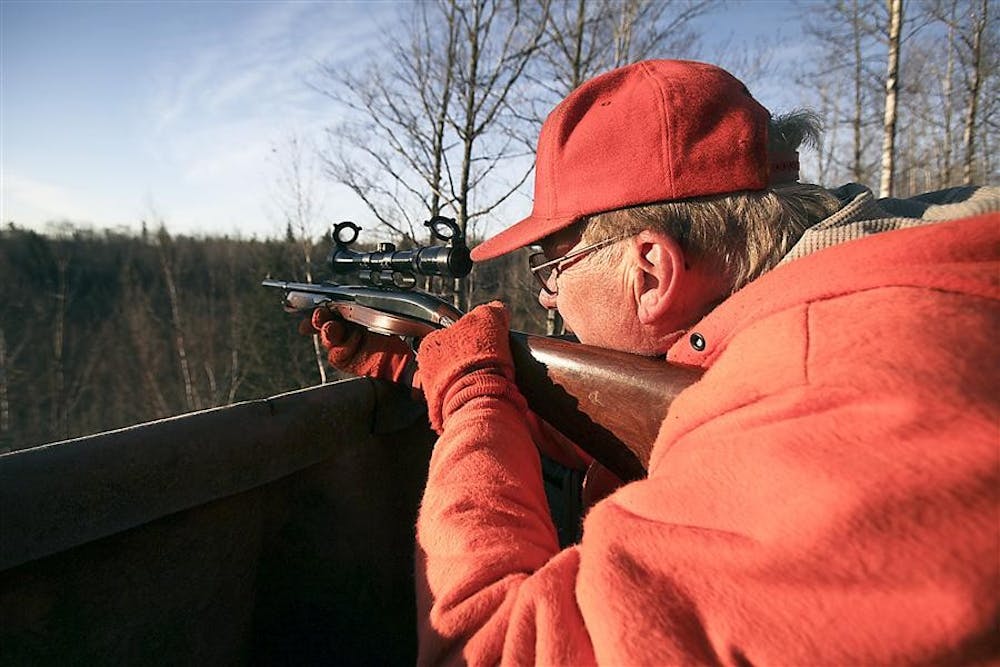
This Monday and Tuesday, select state parks throughout Indiana were temporarily closed to the public for controlled deer hunting.
Annual November deer hunting days have been routine since the first Indiana controlled state park deer hunt in 1993, said Jim Eagleman, interpretive naturalist and employee of the Indiana Department of Natural Resources.
The seasonal event is decided upon each year based on the previous year’s deer hunt
returns.
If a park’s data show a “hunter effort” value higher than .22 — meaning on average two in ten hunters shot one or more deer apiece — the event skips a year and resumes the next, Eagleman said.
Eagleman was one of the founders of the controlled deer hunting event in the
state’s parks.
His findings, while working with a park task force in the mid-1980s, showed very little plant life on the forest floor of Brown County State Park due to deer eating behavior.
Possible solutions included the introduction of natural deer predators to parks, as well as trapping and fertility control.
But controlled hunting was — and still is — the most feasible solution, Eagleman said.
“Nothing can be done other than hunting,” he said. “There are no natural predators to deer available here, so man has to step in and take that role.”
Deer pose a particular threat to evergreen plant species, as well as endangered plants. Indiana parks contain 32 state-endangered species of plants that can be affected by
browsing deer.
Deer also pose a threat to themselves and other animals because of their capacity to eat a large variety and quantity of forest vegetation. An abundance of deer causes a vicious cycle.
“If the deer population grows unchecked, they will eat a lot of the forest material and basically eat themselves out of house and home,” said Mike Mycroft, chief of natural resources for State Parks and Reservoirs. “They will become emaciated themselves.”
He added that deer have a largely negative impact on the availability of acorns, a food source many other forest animals depend on to live during winter months.
To remedy these problems, 331 hunters participated in Monday’s Brown County State Park hunt, Mycroft said.
Each registered hunter was allowed to harvest up to three deer, only one of which could be antlered.
Although evidence suggests that controlled deer populations are better for all ecosystems, this belief is not shared by everyone, including Stacy Jane Rhoads, who has worked with the Bloomington Urban Deer Task Force.
“It’s clear that not everyone thinks dear are a problem in urban areas,” Rhoads said. “There is no correlation between the hunting days at state parks and the urban deer problem in Bloomington.”
As far as protests are concerned, Mycroft and Eagleman said opposition to the controlled deer hunts was seen in the early 1990s but has since faded out.
“The science is clear enough that this is a good thing,” Mycroft said. “I know some areas where orchids are growing where they weren’t before, and deer are looking healthier now than ever before.”
State parks use hunting days to control deer population
Get stories like this in your inbox
Subscribe