Video games deserve to be classified as an art form.
The argument it is still too early for them to be called that is far past. The medium has been around for decades now, and there are an abundance of reasons why they should be considered such.
First of all, there are a number of narrative techniques that can only be done in games. There are games such as “Mass Effect 2,” where the decisions players make feel as if they have lasting effects on the story and where at the end players feel as if the experience was uniquely theirs.
Players can only do that in games; movies, music and books are all passive mediums where consumers can be involved in an emotional way but can do nothing to alter the mediums.
Those against classifying video games as art may say art is supposed to be a passive medium, that consumers should just be viewers and not be participants.
But can’t the term evolve?
Another unique form of storytelling inherent in games is the amount of time spent becoming invested in the worlds they contain. It isn’t just a few pages or few hours of a movie or TV show.
Games can last more than 20 hours, and players are controlling the characters. It’s an entirely different experience only watching the downfall of a character than to actually play through it. Players become more invested in the story since they are controlling the character. Games are the only medium where players can physically control a character’s fall from grace, their dark rise to power and their eventual destruction, such as in the “Warcraft” series.
There is also an intense aesthetic value that is only present in games. Video games are paintings we get to explore, and realism is never a necessity. One of the best-looking games of the last console generation was “Okami,” a game that felt as though the player was playing within a 3-D Japanese water painting.
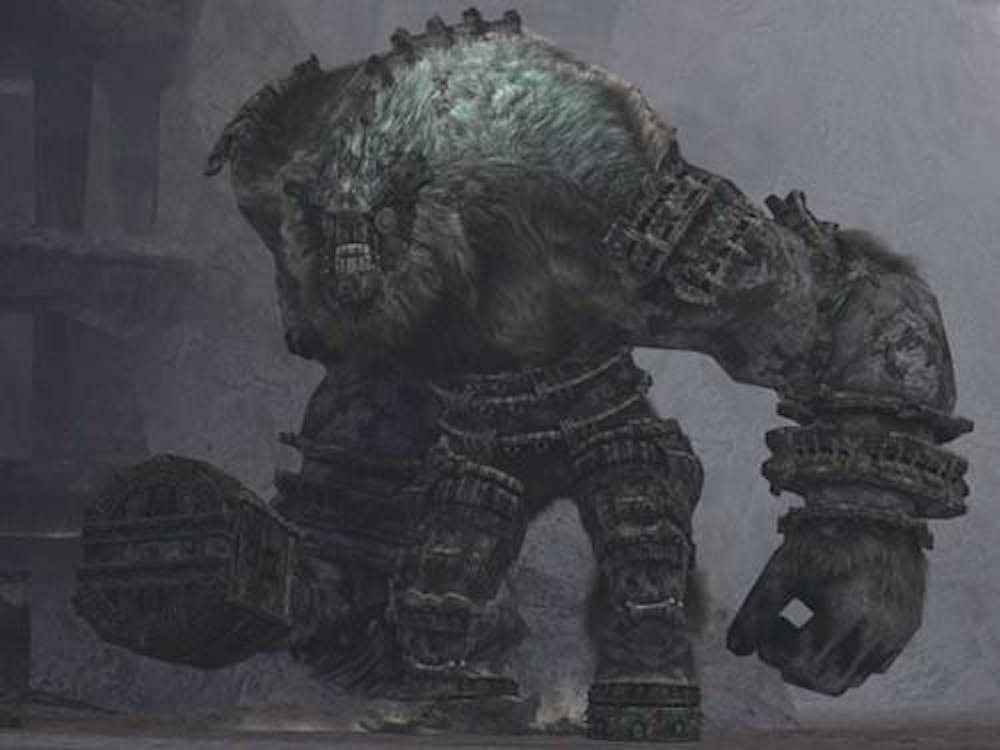
The look of games can be just as varied as any other art form. Areas in games can convey just as many emotions as paintings do, such as the feelings of despair and isolation the world of “Shadow of the Colossus” conveys.
The assets that make up a game all go together to create an artistic whole. There are games where the visuals, music and game play all combine to form something a player has never seen before.
The game “Rez” uses the gameplay more as a backdrop for its trance-inducing music (to which players contribute with each shot they fire, adding to the beat) combined with its visuals into an artistic experience a player can’t get anywhere else.
Roger Ebert argues there are no game developers worthy of comparison to the great poets, filmmakers, etc., but there are people in games who are worthy.
The pioneers such as Shigeru Miyamoto with Mario or modern day innovators such as Jonathan Blow with “Braid” prove this. Every medium of art has its great artists, and games are no different.
This isn’t to say that all games are works of art. Similar to movies, there are crappy pieces put out just for money.
There are the levels of polish expected of games, but that is just as expected of any form. It is the games that balance these expectations with throwing something unique into the mix that make video games worthy of the definition of art.
Playing beats watching
Get stories like this in your inbox
Subscribe