“Inception” says an idea is the most resilient parasite. Consider for a moment that the parasitic idea was that “Inception” is a masterpiece.
Like a parasite, the idea spreads in a firestorm over the Internet.
It jumps to No. 3 on the IMDb Top 250 list. It inspires discussion about an ambiguous final shot that might just be irrelevant. It entices the haters determined to bring everyone down and the subsequent trolls destined to take offense to even the most reasoned claims.
It happened with “The Dark Knight,” it happened with “Avatar,” it happened every week after “Lost” and it’s happening all over again with “Inception.”
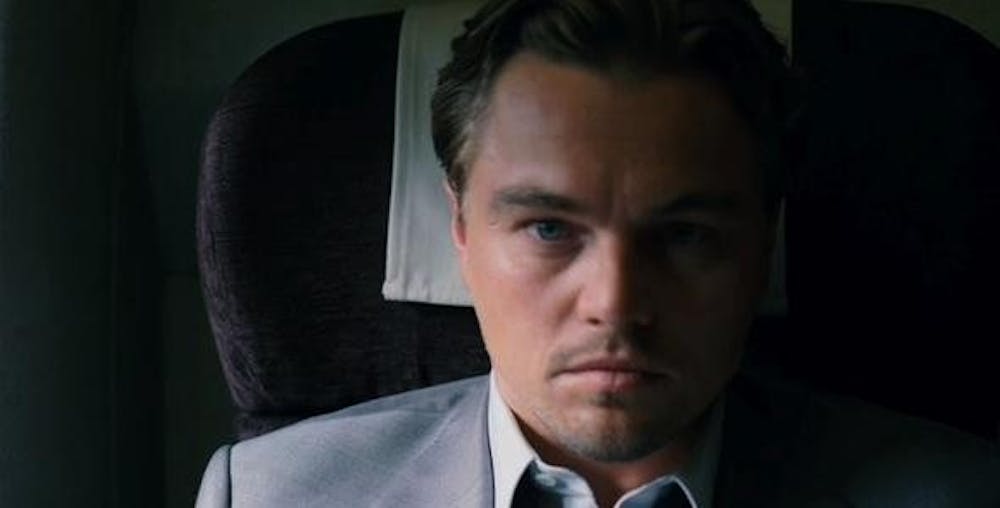
But what comes of these conversations? How quickly does it become less about Leo’s performance, the dour, methodical tone of the film’s first half or the systematic structure of dreams themselves — and more of whether person X can appreciate a complex, difficult film, whether person Y can justify an ambiguous ending or whether person Z’s values and morals conflict with my own holier-than-thou opinion?
Because everyone has an opinion, they’re a dime a dozen — worthless until someone can defend them. And in this Internet age, a culture has been born that believes opinions are as valid as the minds engaging in meaningful, constructive criticism debating how “Inception” holds up against Nolan’s other work, how it succeeds or how it doesn’t in imagining a dream state and how it compares to other films that consider the real versus the artificial.
Such films include “Blade Runner,” “The Matrix,” “2001: A Space Odyssey,” “A.I.,” the “Terminator” franchise and even this year’s own “Toy Story 3,” to an extent.
In this day and age, we do not seek support for our claims, but vindication. What better tools than Rotten Tomatoes and Metacritic to determine who is with us and who is against us?
And in times like this, critics do all they can to clarify their position, writing a piece like the one I’m writing now because an actual discussion about the film would be hopeless.
In his latest blog post, Roger Ebert doubts any film — even one considered great — can be free from some form of attack. The “At the Movies” critics have dismissed the film’s final shot as nothing more than fun, food for thought. They feel that to overanalyze that moment, as so many of the film’s avid admirers have tried to do, would ruin the film’s skillful ambiguity. I happen to agree with them.
David Edelstein writes that “Inception” is “a metaphor for delusional hype — a metaphor for itself.”
Stephanie Zacharek believes that through “Inception,” “we’ve entered an era in which movies can no longer be great. They can only be awesome.”
These are harsh statements, but such is true of a movie as big as Nolan’s latest. “Inception” has earned so much delusional hype, the film cannot be touched with anything but an equally delusional metaphor for its greatness. Similarly, to simply call it a great film would be to classify it in the category with those boring black-and-white films and mundane Best Picture winners, thus failing to describe its sheer, well, awesomeness.
I would love to return to actually discussing a mainstream blockbuster, but the culture has to change first. Discourse must be civil for intelligent thought to thrive.
“An idea can transform the world” many times into a loud group of self-indulgent haters. But an idea can also “rewrite all the rules.”
Let’s start there.
'Cine'cism
Get stories like this in your inbox
Subscribe