Last week, a Muslim woman was barred from boarding a flight at Manchester Airport in the United Kingdom because she refused to submit to a full-body scan for religious reasons.
Because she refused to comply with the scan, she and her female companion both forfeited their tickets to Pakistan.
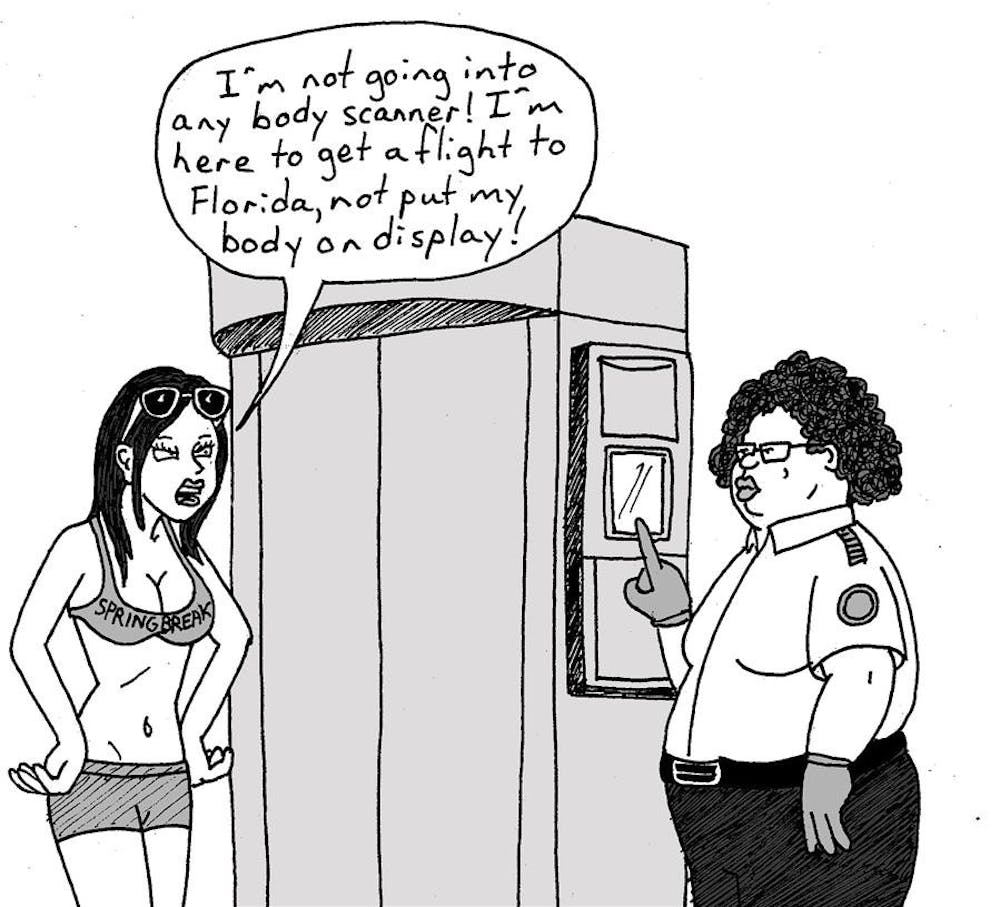
They are thought to be the first passengers to refuse to be scanned, and the incident has sparked controversy. Critics of the full-body scans contend the process is invasive and that concessions should be made for people who don’t want to submit to the scans. Although the scans reveal travelers’ bodies, this is a necessary precaution to prevent terrorism in the skies.
Traveling by plane is a privilege and not a right that should be guaranteed. If one doesn’t want to submit to a full-body scan, tough luck. Since flight is a privilege, security agencies should be allowed to screen passengers in whatever way they consider appropriate. If these agencies make concessions to wary fliers, they will slide down a slippery slope. One alternative is to have a pat-down search available instead of the scan.
However, there are three problems with this.
First, pat-downs are less effective than the scans.
Second, this will require more security personnel and therefore money.
Third, where will the security agencies draw the line if they make small concessions now? How long will it be before a passenger refuses both scans and pat-downs as too intrusive? The line should be drawn at the full-body scans since they only reveal the body and do not require actual touching. We must put security first, and since it’s a choice and privilege to fly, passengers should be willing to comply with a few extra measures in our dangerous post-Sept. 11 world.
A scanner standoff: Pro
Get stories like this in your inbox
Subscribe