Democrats have to make some tough choices in light of Republican Scott Brown’s election victory in Massachusetts, which will soon land him in the same seat once held by liberal lion Sen. Edward M. Kennedy.
Thanks to Brown’s election, one of Kennedy’s greatest causes, health care reform, faces the possibility of becoming completely derailed.
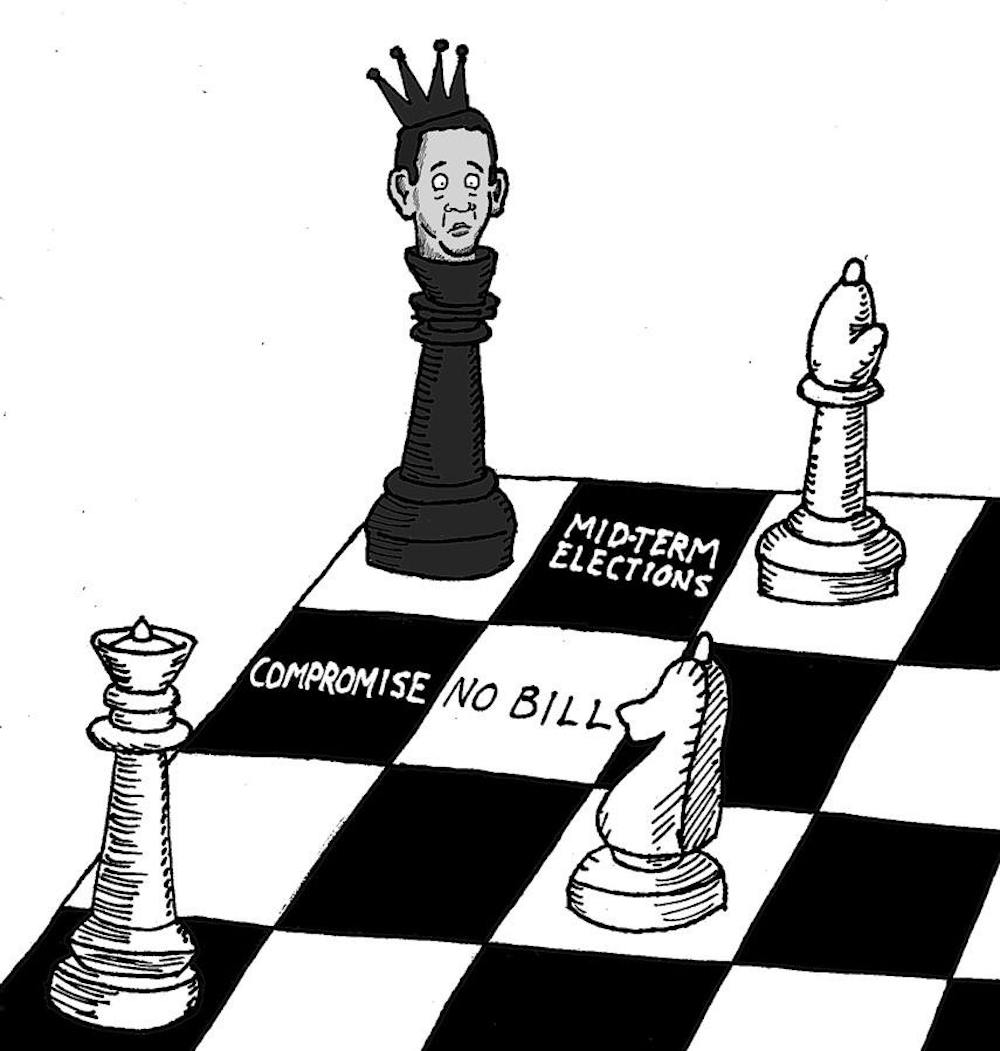
Democratic leaders have a few options to keep the current reform package moving.
Health care bills have cleared the House of Representatives and Senate, but the Senate still needs to vote on a version of the bill with the differences between the House and Senate versions ironed out.
Working quickly, Democrats could get a reconciled bill through the Senate before Brown takes his seat.
Another option would be to have the House pass the Senate version of the bill as it is, even without a provision for government-offered health insurance, the so-called “public option,” that many liberals think is the key to reform.
It might turn out that neither option will prove plausible. Both would be arrogant after a rejection of the current plan by voters. But health care in America is still deeply flawed, and a third option for Democrats, breaking up the bill and making more concessions to Republicans, might produce legislation that is better than nothing.
Such an option might be tough for some on the left to stomach because many already feel health care reform was stripped down to get moderate votes. But two key players, Sens. Dick Durbin, D-Ill., and James Webb, D-Va., have already indicated an unwillingness to cram the current bill through quickly.
The Senate bill also has plenty of other problems in the House besides its lack of a “public option.” Many House Democrats hate that the Senate bill includes a tax on expensive insurance plans that would fall on many union workers. And, ideological differences aside, few House Democrats are particularly eager to vote for a health care bill that helped cost the party a Senate seat in liberal stronghold Massachusetts.
Breaking up the health care bill will be tricky. Banning insurance companies from discriminating based on pre-existing conditions is popular on its own, but such a policy would give people an incentive not to buy insurance until they are already sick.
A mandate to purchase health insurance would make this workable but gets into territory of the current bill that is deeply unpopular. A mandate would also hardly be fair without subsidies for the poor, who would be forced to buy coverage they can’t afford.
Fortunately, there is a precedent for passing smaller, but still important, measures after failing to pass major health care reform.
After former President Bill Clinton’s reform plan collapsed, he was able to enact the State Children’s Health Insurance Program and the Health Insurance Portability and Accountability Act, a law that made it easier for workers to keep their health insurance after they lost employment.
As the pressure begins to mount for Democrats to solve their health care dilemma, they would do well to remember this: small measures are better than no measures at all.
Resuscitating reform
Get stories like this in your inbox
Subscribe