WE SAY Educate, don’t propagandize.
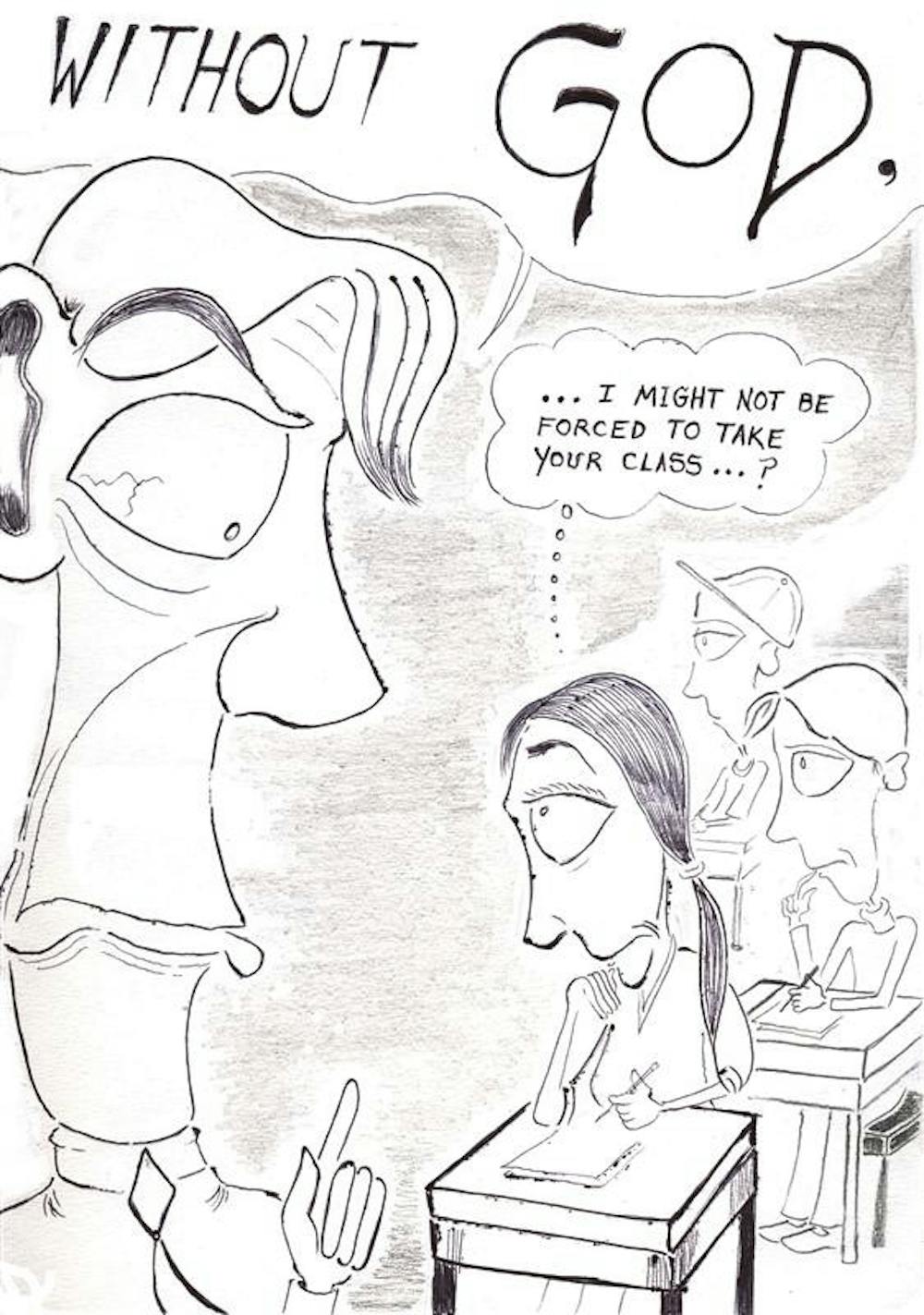
The truce is off. The culture wars are on again. When they meet this summer, Texas social studies teachers are going to have to consider the recommendations of six curriculum reviewers, including three who call for “revamping the K-12 curriculum to emphasize the roles of the Bible, the Christian faith and the civic virtue of religion in the study of American history,” according to The Wall Street Journal. The recommendation comes from those three reviewers who were all appointed by social conservatives.
The Wall Street Journal continued, stating the reviewers believe “children must learn that America’s founding principles are biblical” and that “the curriculum should clearly present Christianity as an overall force for good.”
There have been reasoned arguments, by some, to include world religions in school curriculums to broaden the perspectives of students. However, re-writing American history curricula (not even world history) to include religion in the way the Texas reviewers have suggested paints a distorted picture for students. Over-emphasis of a marginal aspect of American history can make it seem more influential or ubiquitous than it really is. To children who don’t already have a firm foundation of U.S. history, this is potentially dangerous.
It is somewhat of a philosophical question, what to include in a history book. After all, history is a deconstruction of “necessary illusions” and the study of “emotionally potent oversimplifications,” American theologian Reinhold Niebuhr wrote. The school year is only so long; something of our 200-plus years has to be trimmed. What goes? Elizabeth Cady Stanton? Cesar Chavez? There will be bias any which way you trim it.
But this proposed “trim” hacks away at our history and leaves impressionable students with a distorted sense of events.
Yet, surprisingly (or not, it is Texas), other possible changes to the curriculum aren’t being discussed that deserve the attention. Jesus F. de la Teja, chairman of the history department at Texas State University and one of the non-socially conservative reviewers, wants to include more diverse role models in our history. This prompts a similar question, although one that actually deserves debate: Are Hispanic, Native American, etc. voices underrepresented in the current curriculum, or is this just a similar example of pushing personal, political beliefs onto youth?
How to write a history book – to decide which events and people to discard and which to discuss – is a difficult decision because it is necessarily subjective. But Texas, which in the past made creationist critiques of evolution a part of science curricula, has created a nasty tradition of bringing their politics too far into education.
Politicizing education
Get stories like this in your inbox
Subscribe