WE SAY There will be negative side effects with Obama’s strategy.
President Obama announced May 4 a series of steps that would help him to “detect and pursue” American tax evaders.
His position shouldn’t come as a surprise. In February 2007 he co-introduced a bill to stop offshore tax havens and tax shelters abuse. He also wanted to make it a part of the budget proposal in late March of this year.
At that time, the AIG bonus hullabaloo seemed to provide him with the necessary political window to get it through, because the public had also just become aware that “83 of the 100 largest publicly traded U.S. corporations had placed subsidiaries in tax haven jurisdictions to, ostensibly, pay less on their tax bills. This included a number of firms that had received billions of dollars in bailout funds,” according to the Huffington Post.
Undoubtedly then, to capitalize on the popular fear of and contempt for corporations right now, Obama’s proposed overhaul of the U.S. tax code is being sold with “business as corporate greed” rhetoric and by making statements like, “(You) pay lower taxes if you create a job in Bangalore, India, than if you create one in Buffalo, N.Y.”
However, of the estimated $100 billion per year that the Treasury loses to offshore tax evasion, only 30 percent results from corporations. The rest is from individuals. So the White House’s sell seems to be a little misleading.
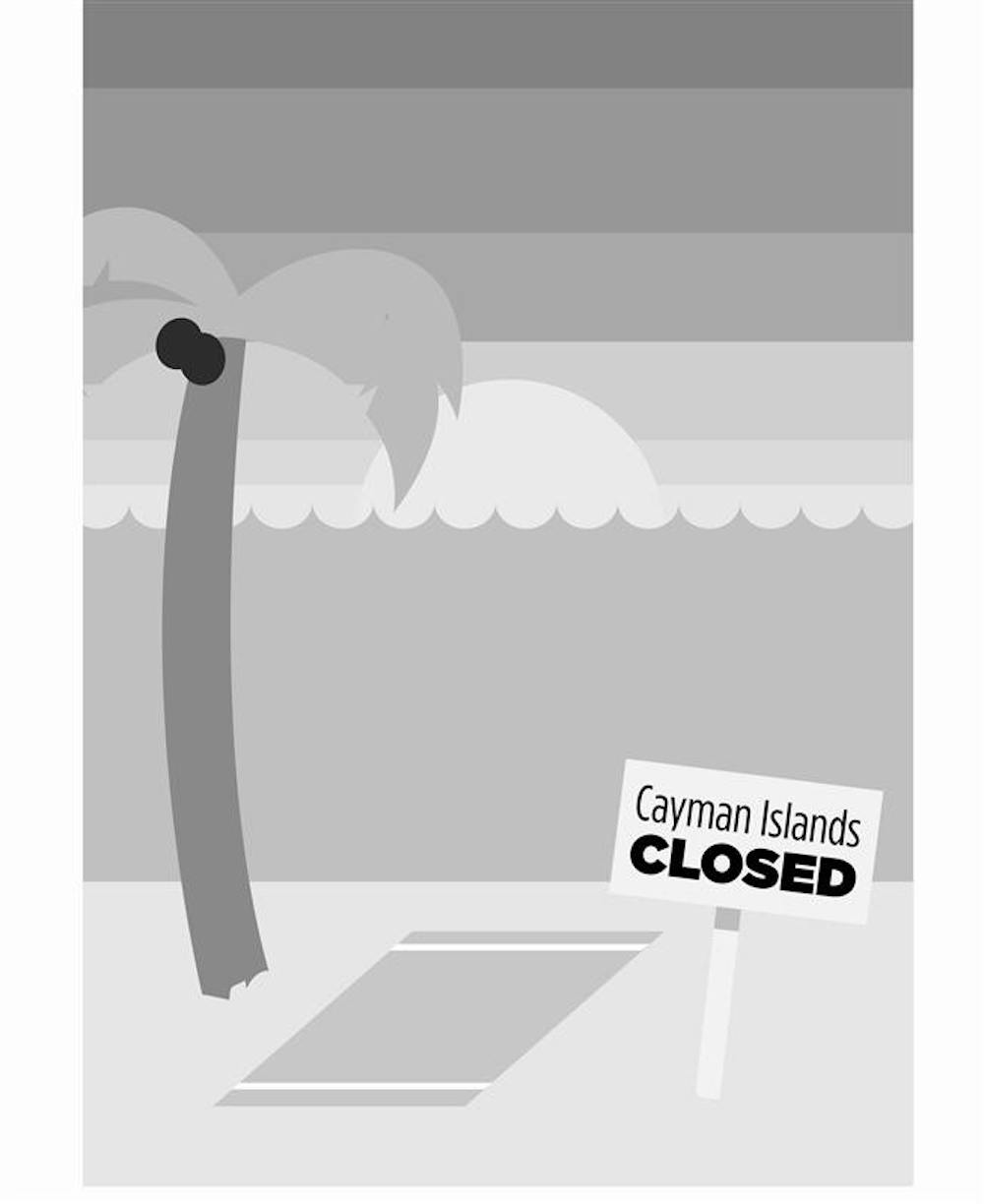
Part of the change in the tax code will eliminate tax havens abroad. By eliminating tax sanctuaries like the Cayman Islands, the administration hopes to curb tax evasion. However, this will produce negative side effects for businesses.
The argument for eliminating tax havens takes a superficial guise of pragmatism. Sen. Carl Levin, D-Mich., who co-introduced the bill with Obama back in 2007, said back then that with “a $248 billion annual deficit, we cannot tolerate a $100 billion drain on our Treasury each year from offshore tax abuses.”
It’s hard to believe that spending can’t be cut somewhere and that increasing revenue through this way – and impacting business – is best. There’s at least one place where cuts can be made: discontinuing the automatic pay increases for Congress, the most recent of which was voted on this past January, and which Carl Levin himself said “yea” to.
On a fundamental level, of course, we’d like to curb tax evasion. By its definition it’s illegal. However, it’s difficult to say whether businesses, which are exploiting loopholes by placing money overseas in tax havens, should also be punished. Maybe to this administration they are doing something immoral as well, even without actually breaking the law. But, in this case, what’s the difference between tax evasion and a financially prudent business decision? Whoever is in office?
If Obama wants to catch more tax evaders, great. But, his strategy of attacking tax havens might not be the best way to do it. Let’s be real about what this tax overhaul would entail.
Closing the Cayman Islands
Get stories like this in your inbox
Subscribe