
Congress recently approved a bill that will force representatives to forego a scheduled pay raise for 2010.
The move saves taxpayers a projected $2.5 million, according to a statement from Rep. Baron Hill’s office.
Rep. Harry Mitchell, D-Ariz., originally introduced the Stop the Congressional Pay Raise Act in 2007. This year, he received more than 100 co-sponsors, including Hill of Indiana’s 9th District and Rep. Dan Burton from Indiana’s 5th District.
The bill will block any automatic pay raises for members in the Legislative Branch of Congress for the fiscal year of 2010, according to Mitchell’s Web site.
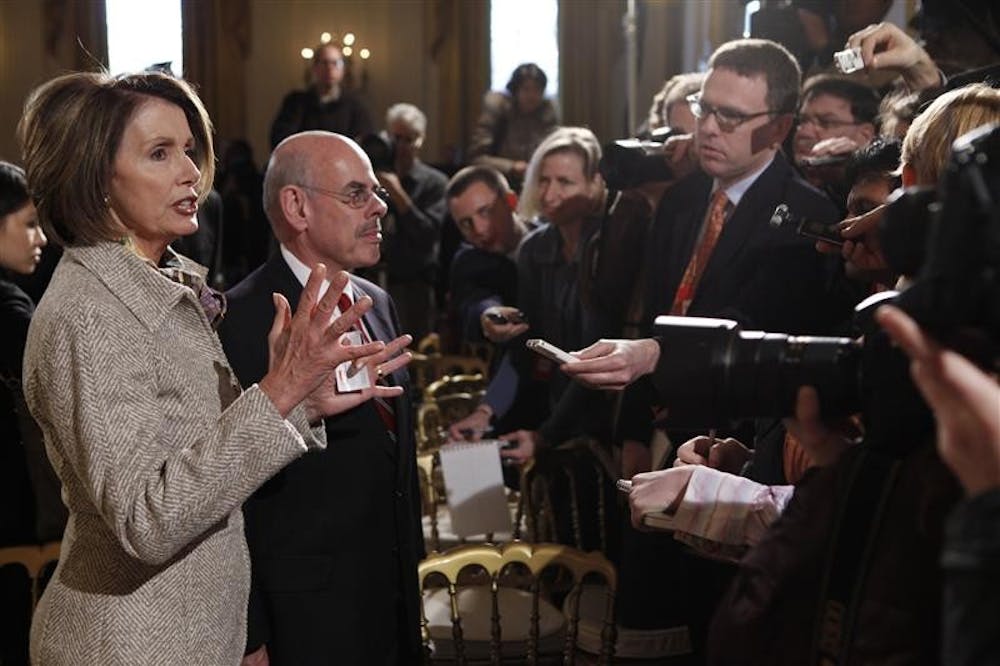
Speaker of the House Nancy Pelosi spoke to the House of Representatives on Feb. 11, saying that the cost-of-living adjustment would not continue due to the “condition of our economy and the crisis our country is in.”
The blocking of the cost-of-living adjustment was attached to an Omnibus Bill, which Congress approved Wednesday. The bill provides federal funding for the government through the rest of the fiscal year.
In 1989, Congress created the cost-of-living adjustment that would give members of Congress an automatic pay raise at the end of every fiscal year if members of the House didn’t block the bill, according to gopetition.com’s “Stop the Congressional Pay Raise” petition.
Mitchell’s first two attempts to petition the annual pay raise were unsuccessful, with only 29 co-sponsors in 2007 and 34 in 2008. This year, however, Mitchell’s petition had 109 co-sponsors when Pelosi spoke to the House.
Mitchell’s Stop the Congressional Pay Raise Act was the first of its kind to generate broad bipartisan sponsorship. At the beginning of his petition he had almost equal co-sponsorship, with 61 Democrats and 45 other Republicans, according to gopetition.com.
During the bill’s introduction, Mitchell said that Congress should not be able to accept a pay raise if Americans could not get one.
“The American people did not get a pay raise this year,” Mitchell said to Congress. “I do not know how in good conscience we, as their representatives, cannot only accept one, but insist on another one for next year.”
In a Feb. 17 statement, Hill said he was pleased with Congress’ decision to block the annual pay raise.
“Our constituents are largely not getting pay raises, so neither should we,” Hill said.
Burton issued a statement after Pelosi addressed the House saying that blocking the bill showed that Congress put the citizens first.
“The Democrat leaders in the House finally agreed to make members of Congress tighten their own belts,” Burton said.
But some members of Congress and other federal employees are opposed to blocking the cost-of-living adjustment because the adjustment is an essential part of income for their families, said John Donnelly, spokesman for Burton.
“Some members sleep in their office so they can have a home in Washington,” Donnelly said. “Some have kids who are at the college age who they are trying to put through higher education.”
The money that was originally meant for the cost-of-living adjustment will stay in the treasury, Donnelly said.
“We don’t have this money anyway, so it would just be seen as not increasing our debt,” Donnelly said.
Congress bill pushes to forgo pay raises for members
Get stories like this in your inbox
Subscribe



