
Have an hour or two to spare between classes? Might as well get paid for it.
Junior Laura Mishler did just that.
During the past two years she has participated in both the required experiments for her introductory-level psychology courses as well as paid experiments.
When she has classes in the Psychological and Brain Sciences building, it is easy for her to see the experiments available on bulletin boards, call the number listed and set up a time.
“I would think, ‘Oh, I have a two-hour break; I can get an experiment done,’” Mishler said.
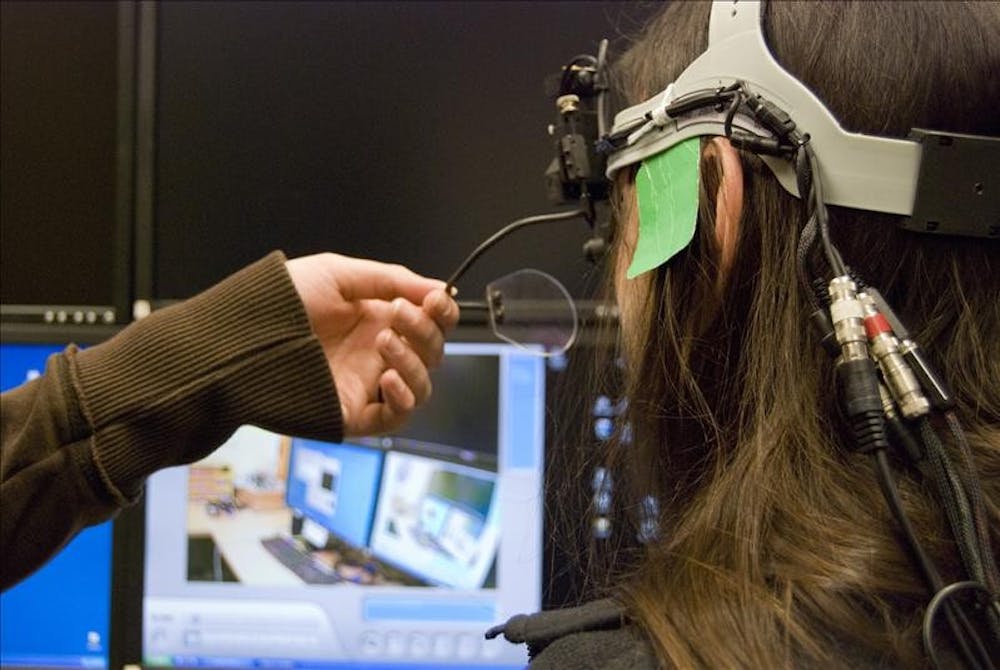
The Department of Psychological and Brain Sciences constantly conducts experiments for undergraduate and graduate students. Flyers on bulletin boards throughout the psychology building advertise experiments about drinking, drug use, attention problems and more.
“There is something for everyone,” said Winona Snapp-Childs, a post-doctoral researcher in the psychology department.
Flyers are displayed outside the psychology building as well.
“We post as far as we walk,” Snapp-Childs said.
The Human Subjects Committee in the Institutional Review Board stamps the flyers for approval, Snapp-Childs said.
Not only can you get a little extra cash, but by participating in experiments, you can help many IU graduate students and professors with their research. Depending on the length and experiment, students can be paid about $8 an hour for participating.
Snapp-Childs said the students that are paid seem to be more focused on the task than the undergraduates who are required to participate for their class and just want to get it done.
Joe Anderson, a graduate student in Psychological and Brain Sciences and Cognitive Science who recently finished his dissertation, said his experiments were focused on behavior and reception/action research. But the experiments conducted in the psychology department benefit all areas of research.
“The experiments support graduate study, undergraduate projects and basic research supervised by the head of that lab,” Anderson said.
While Anderson is conducting experiments, he is most likely also analyzing data from the last experiment or data that will be published in scientific journals. It is a constant “rolling schedule,” Anderson said.
Experiments can run anywhere from a week to a year, depending on the research.
It is not only graduate students conducting these experiments. Anderson said the undergraduate research program, research coordinators and assistants as well as professors conduct experiments.
Noah Silbert, a graduate student in Cognitive Psychology, Linguistic, Speech and Hearing Sciences, said he sends out e-mails to graduate students or puts up flyers concerning his experiments.
“There are experiments all of the time, with different people running them,” Silbert said.
Psychology experiments a way to get fast cash
Get stories like this in your inbox
Subscribe



