Two years of election coverage accomplished what had previously been unheard of in Indiana. The coverage brought political candidates to rallies in the Hoosier state and engaged residents in the election process.
The elections gave Indiana the chance to make its mark on the rest of the nation. For the first time in years, we were considered a swing state, and presidential candidates ran ads here. And even though Indiana hadn’t gone blue since Lyndon B. Johnson ran for office in 1964 , we were once again on the map in yellow, instead of dark red, during the final weeks of the campaign.
But Indiana’s return to electoral significance is important for more than the mark it will make when it sends 11 electors to the Electoral College this Dec. 15. This election wasn’t just about Indiana making a mark on the rest of the nation. By inviting in the scrutiny of a too-close-to-call presidential race, the state inadvertently let in the rest of the country, and perhaps the rest of the world.
Serious media coverage started before the general election was underway. Although John McCain was the sure-thing Republican nominee, the primary race between Sens. Hillary Clinton and Barack Obama drew record turnout to the polls in early May as voters realized they actually had a chance to help decide the tight race.
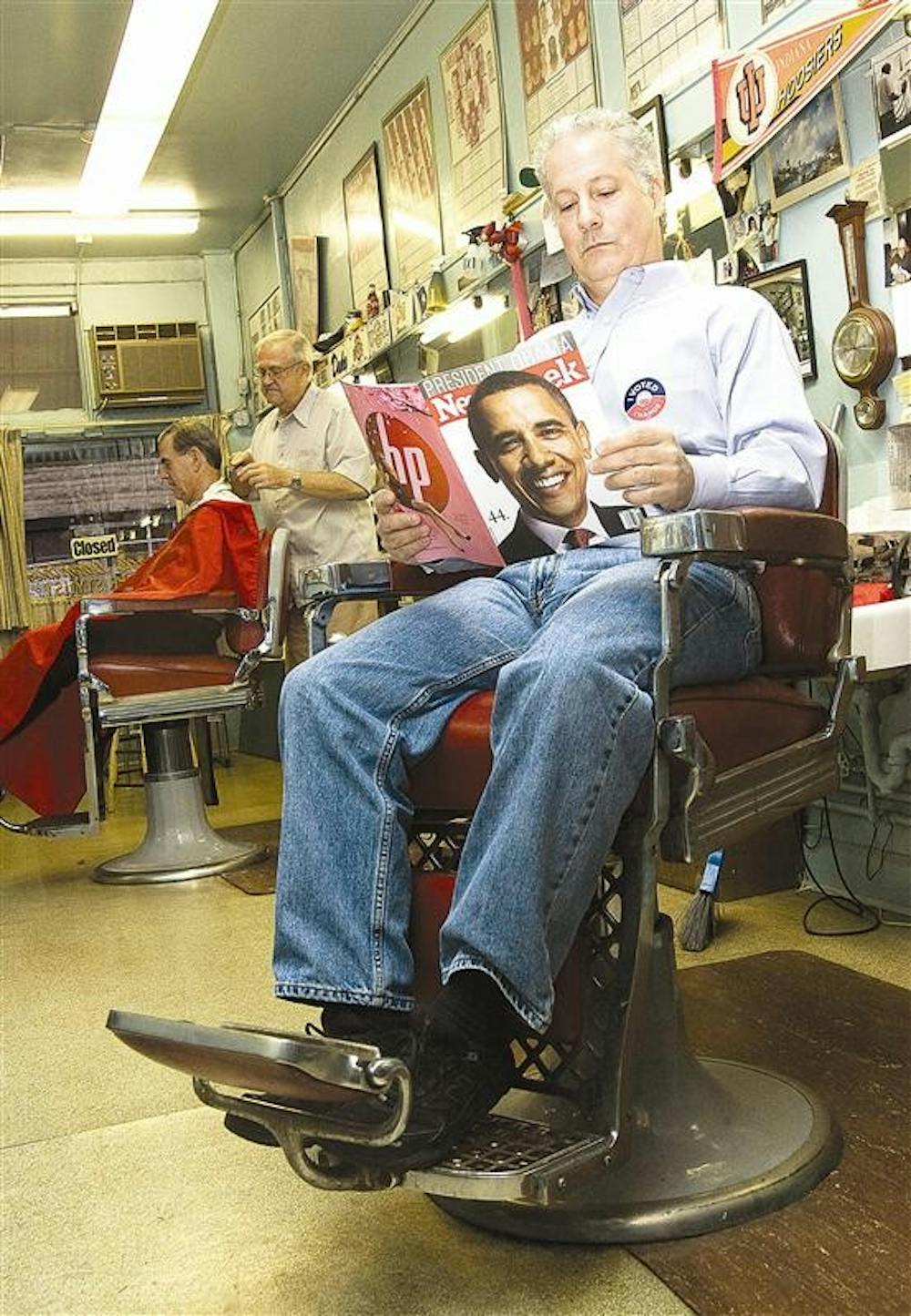
On May 4, The New York Times published a piece that set out to explain the political forces at work in the state. However, I was disappointed that the story relied less on empirical evidence to explain election trends than it did on stereotypes of Hoosiers, reporting for example on a barber in southern Indiana who had “two Bibles stacked on the counter beside his barber chair” and “slid open a drawer to reveal the gun he keeps within reach.”
The article went on to report that the barber’s town was “without an interstate highway through town ... has struggled to lure industry” and that voters in predominantly black Gary were likely to vote for Obama because “he’s black and qualified.”
I was saddened to see the national media use cheap and polarizing characterizations to cast my state as a backwater. However, I thought I’d be welcoming a new perspective when the international media took on the task of defining Indiana: Surely it would tout a more flattering characterization of our state.
In early October, the highly reputable London-based Economist took its shot at nailing down the essence of Indiana. In a piece whose title – “Hoosier Daddy?” – could only appeal to someone who hadn’t seen the same joke made a million times over in local headlines, the Economist went further than even The New York Times. The article not only makes Indiana seem to spring out of a Carson McCullers’ novel about a languishing southern town, but also gives our state a review that would make it, next to Waziristan, perhaps the last place on Earth any enlightened person would choose to live.
Using Martinsville, only 20 minutes north of Bloomington, as an example of Hoosier values, the Economist described the town as one in which “tattoos outnumber people” and in which a quoted woman reasonably withheld her name because of a great fear that her neighbors might “torch her house.”
Yet, a glance over the headlines of Martinsville Reporter Times doesn’t reveal that arson is especially prevalent in the community. And honestly, is it really fair to use the former Ku Klux Klan stronghold as a measure of the entire state?
Finally, in a melodramatic narrative titled “The Yard Sales of Indiana,” The New York Times delivered the final slam against Hoosiers, many of whom make lower wages than the national average and who have seen their jobs shipped overseas.
Rather than empathizing with those who are victimized, traveling reporter Bill Barich wrote: “the boundaries between states are artificial, of course, but I felt the dark mood lift as I traveled through Illinois.”
The critical and relentlessly unsympathetic light these articles used against the helpless was perhaps the greatest tragedy heightened media coverage brought us. Beating people over the head with their ignorance is not the most effective way to help them improve their lives. And Indiana clearly has a way to go before its residents are prepared to participate in the rewards of a 21st Century society.
Indiana, by a thin margin, showed that racism and ideologies of the past wouldn’t inhibit its voting for a qualified, black candidate, regardless of what pundits predicted. I doubt even the narrow majority Obama carried in the state was forged by the local readership of elite publications. Demand for The New York Times has to be pretty small in southern Indiana. Still, I am inspired to think that all the Hoosier voters not in the top 5 percent of income earners might have considered it legitimate to vote their economic interests for the first time ever. It goes to show that this state just might be on its way to designing a brighter future for itself.
Even if many locals haven’t read the outside world’s disparaging remarks about their lifestyle, I hope that the increased attention our region has received has promoted a greater awareness of self in Hoosiers’ consciences.
We don’t have to assume that Barich’s “cut-and-run to a sunnier Illinois” is the best response to living in a straggling state. It’s time to see ourselves in the context of being a valuable participant in national debate and realize how far we have to go until southern Indiana is the sort of attractive place outsiders would want to move to.
Thankfully, painting the state blue for the first time in more than 40 years shows that even famously stubborn Hoosiers might be contemplating change. I hope we continue to back the sort of policies that made Indiana support Obama – better education, affordable health care and greener technologies – because those are just the sort of initiatives we need enacted to once again surprise the press with our self improvement.
Not what they expected
This presidential election, Indiana captured everyone’s attention, but most saw us through a lens of stereotypes and caricatures.
Get stories like this in your inbox
Subscribe