With consumers becoming increasingly concerned about “going green,” understanding the ethics behind one of the most highly traded commodities in the world is vital.
Organic and fair trade coffees are sold all over Bloomington, but many people might not even know what these terms mean or understand whether buying these products means they’re really making the “ethical” choice.
According to the Coffee Research Institute, an “organic” label means the coffee is made from beans that have not been treated with pesticides and herbicides. Some certified organic coffees must also adhere to standards placed on recycling,
composting, soil health and protection of the environment. Proponents of organic coffee are part of a larger organic movement, which is a collection of organizations and individuals who believe organic farming to be a more sustainable form of agriculture.
Fair trade is a social movement and market-based approach to trading goods, according to the Institute. Its goals are to empower farmers in developing countries by promoting fair wages and sustainable planting practices. Fair trade coffee cooperatives do this by guaranteeing farmers a negotiated pre-harvest price. That price can be no less than $1.26 per pound, the fair trade minimum, according to the Institute – almost double the market price of 65 cents per pound.
Fair trade raises the price that farmers receive for their coffee per pound, said Ricardo Lopez, an assistant economics professor at IU, so their incomes increase. It also protects them from dramatic fluctuations in the price of coffee. This higher and more stable income is likely to increase the standard of living for usually poor farmers in developing countries, he said.
Jamie Shepherd, owner and roaster at B-town Beans, 2426 N. Smith Pike, said fair trade coffee is the fastest growing segment of the specialty coffee market. Shepherd said he supports the organic movement, but admits it is not perfect.
“The whole organic movement is young, and the government is still playing catch up with the legalities and structuring,” Shepherd said.
Most of the regulating still occurs through private organizations such as Fairtrade Labelling Organizations International, whose independent labeling council, FLO-CERT, is responsible for certifying fair trade products, according to the organization’s Web site.
However, Shepherd said not all coffee labeled as organic on store shelves is organic.
“Truthfully, I know roasters who sell coffee as organic and are not certified to do so.”
Also, not all organic coffee farmers are wealthy enough to afford certification, Shepherd said. In the United States, organic products are regulated by the USDA’s National Organic Program. Internationally, the third party organization Quality Assurance International studies and certifies organic products.
“They are organic not by choice, but by poverty,” Shepherd said of some farmers who sell organic coffee without certification.
This coffee does not make it onto grocery store shelves with organic labels, despite the fact that these poor farmers also cannot afford pesticides and antibiotics, so their products are de facto organic.
Fair trade coffee is also increasing in popularity. In 2007, fair trade coffee sales amounted to approximately $3.62 billion worldwide, a 47 percent year-to-year increase, according to Fairtrade Labeling Organizations International. However, this rapidly growing movement has its critics.
Some critics argue that fair trade may reduce the quality of the coffee consumers buy, Lopez said. If a farmer can produce two varieties of coffee: high-quality and low-quality, and the standards of fair trade do not specify about the quality of the coffee, then a farmer may be enticed to sell the low-quality coffee as fair trade and the high-quality coffee on the open market at a higher price.
Another criticism Lopez pointed out is that if the international price of coffee increases to a level that is higher than the fair trade price initially set, vendors may have to sell at a lower price than they would on the open market if they have made commitments to a fair-trade vendor.
This situation actually happened during winter and spring of 2005 in some areas of Central America and Mexico. In most cases, fair trade cooperatives were able to convince farmers to deliver based on arguments of loyalty, Lopez said.
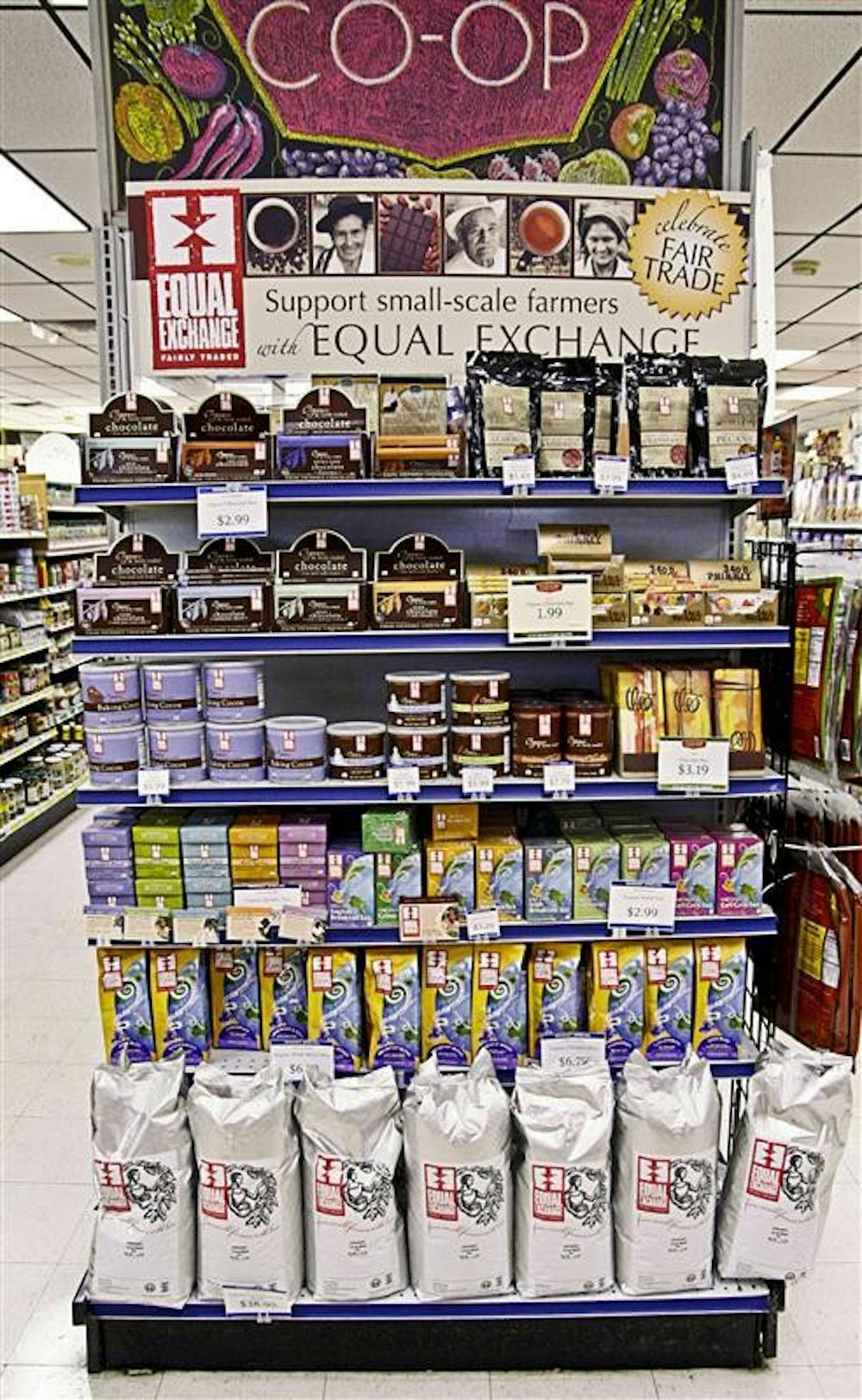
Several coffee houses and grocery stores in Bloomington, including the Sahara Mart at 106 E. Second St., sell organic and fair trade coffees.
“This is a family-owned business and our philosophy is to support other families,” said Shona Flynn-Duncan, Sahara Mart’s public relations manager.
Bloomingfoods also carries organic and fair trade coffees. Nicki Owens, a bulk-buyer for Bloomingfoods, sees the organic and fair trade movements as growing, and expects Bloomingfoods and similar grocery stores to offer more and more producer conscious products in the future.
“We don’t want to carry products that are harvested by slaves,” she said.
The ethics of coffee
Get stories like this in your inbox
Subscribe