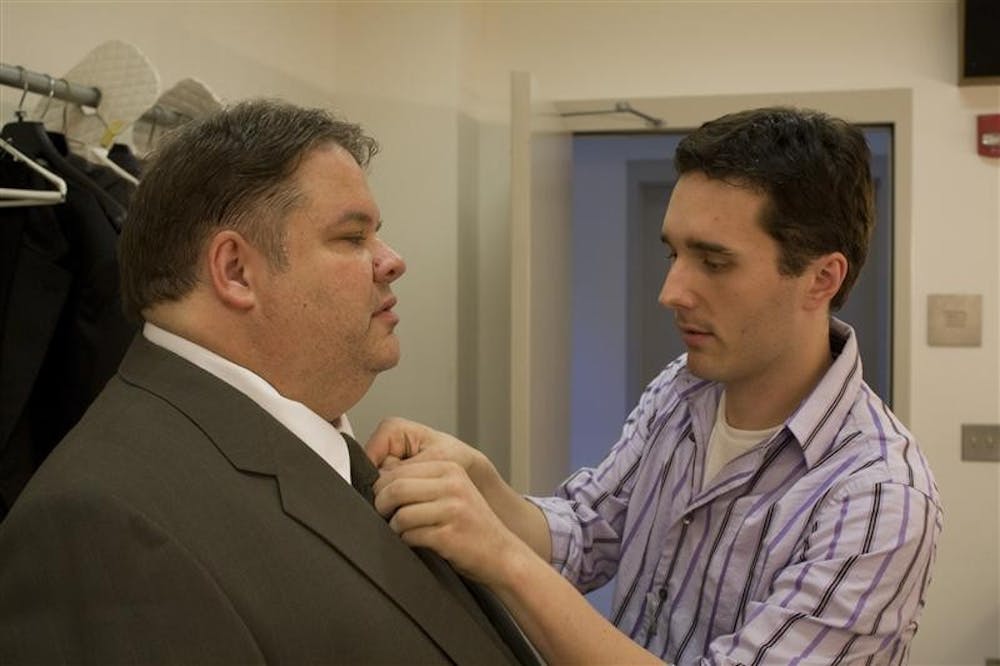
Scott Anderson is a costume designer for "Dead Man Walking."
Each costume designer attempts to discover and understand each character in the play on which he or she is working.
From this understanding, we dress them accordingly and use the psychology of the dress to aid us in this process.
With modern designs, this can be especially difficult. Our audience is intimately familiar with the clothing they see every day and will make a gut reaction off of what he or she innately knows or thinks about our modern society.
In the case of “Dead Man Walking,” the audience sees several different worlds that need to bleed into one another.
“Dead Man Walking” is a memory play that needed to be solidly based in reality. Although many of the characters are seen in the same costume, for example, how Sister Helen remembers them, each garment attempts to capture the essence of the character and changes in the costume reflect the change within the character.
In Act I, Sister Helen is seen in a suit that is soft and inviting. As she comes into her role as Matt’s spiritual adviser, her costume changes to that of a navy suit that mirrors the habit and her own inner growth.
We first see the world of the St. Thomas housing projects and the Sisters who work there. This scene quickly transitions into a parole board hearing, and although there are several different social classes within this scene, each person has dressed up in a sign of respect to the institution.
The differences in class come not from the silhouettes of the garments, but from the fabric chosen, the cut of the suit, the color and the small details that are left out or added to finish off a character.
All of these features help define the family, who is haunted by the deaths of its beloved children. Finally, the audience sees the death chamber. The stark black and white color palette of the moment adds a pointed feeling to the stage.
When looking for the character, a costume designer must have an in-depth understanding of the script and look to support every decision with either the original text or the intent of the text.
Sometimes this is difficult, if not impossible. During these times, the costume designer must be a detective who looks into the life of the playwright at the time he or she wrote the script and at the given circumstances of the time to see what avenues might aid in further discovery.
At no point is this process truly over. Like the actor, the costume design can continue to develop a further and more complete understanding of the character and help the audience and the performer with the costume.
Costuming development, discovery process never over
Get stories like this in your inbox
Subscribe