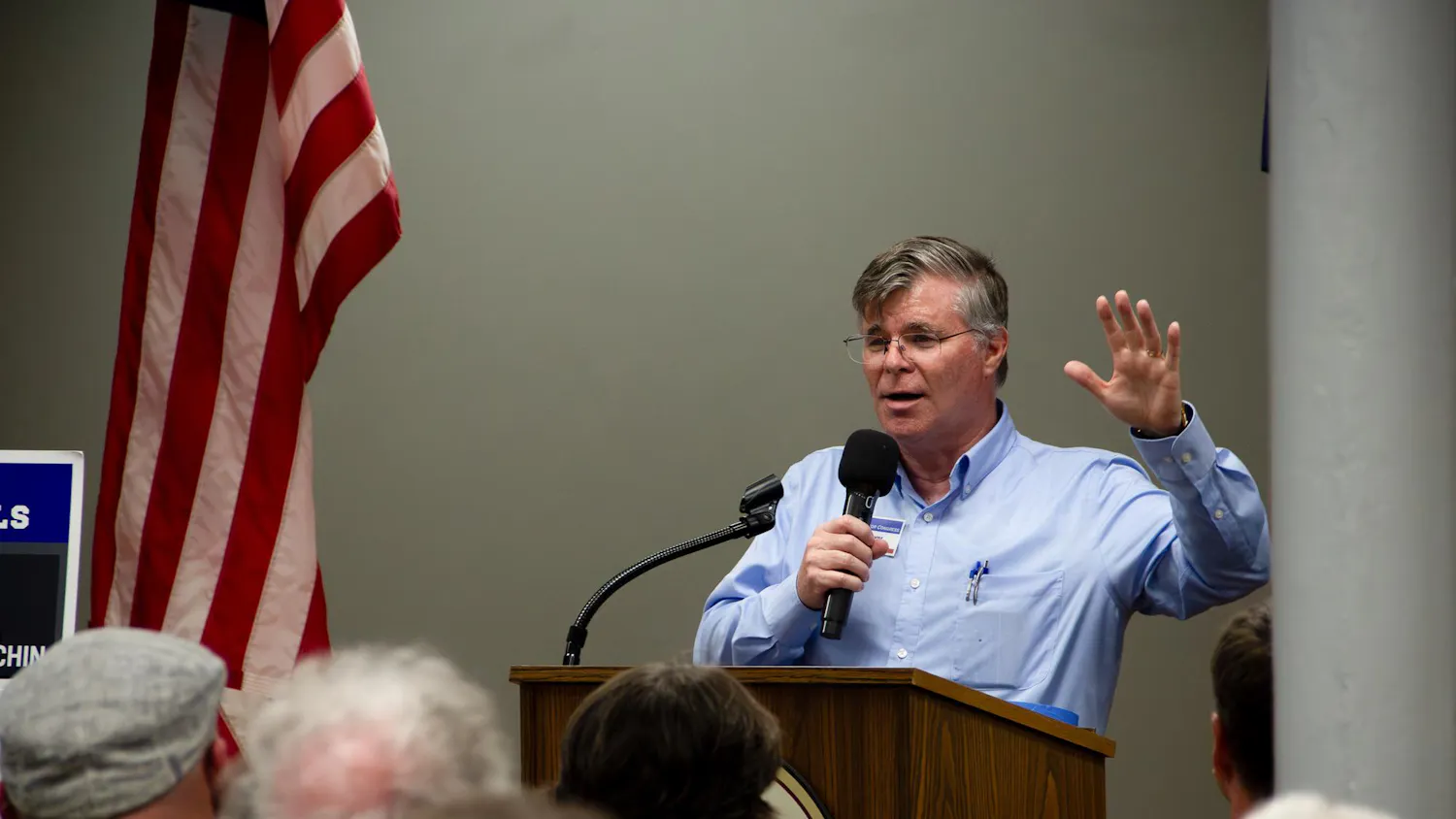
Inside a small granite cell on death row in 1984, Kirk Bloodsworth spent his first night in jail as a convicted rapist and child murderer -- but he wasn't guilty. When the electricity failed that night, the prison went black and the inmates' roar grew louder. Fires were burning, toilets were stuffed and inmates could be heard chanting through the vents at him.\n"We're gonna' get you," they chanted. "We're gonna' do to you like you did to that little girl."\nBloodsworth cried himself to sleep that night but continued to protest his innocence. It would be almost 10 years before DNA evidence would affirm what Bloodsworth had demanded since the day he was arrested -- he was not guilty.\nBloodsworth was confined to death row in the Maryland State Penitentiary after being convicted of brutally raping and murdering 9-year-old Dawn Hamilton. When her body was found, Hamilton was undressed from the waist down -- her pants and underwear flung in the woods and a stick inserted in her body. She was bludgeoned to death with a rock, and a lingering boot print remained on her crushed throat. \nWhen a composite sketch was released of the suspect, a neighbor called local police saying Bloodsworth had matched the description. A line-up was created and witnesses began to identify Bloodsworth as the suspect. One boy who later testified initially picked out a different man, but his mother later called and said he made a mistake. Bloodsworth maintained his innocence, but the neighborhood demanded an arrest and he was later charged by police.\nBloodsworth recalled his first days in prison while speaking to students at Woodburn Hall Thursday. Bloodsworth tours cities around the country, telling his story to offer a first person account of the criminal justice system.\n"It was a God-awful place and it smelled terrible," Bloodsworth said. "It's the closest thing to what I think hell could look like."\nTwo years later, Bloodsworth received a second trial after new evidence surfaced. Witnesses had see a male who matched the description of the killer checking into a mental hospital complaining about an incident with a little girl.\nAfter another jury trial, the verdict came back -- guilty, again. But this time, he was given a double life sentence.\n"Not only was I not going to die," Bloodsworth said. "But now I'm going to die a long death in jail."\nBut Bloodsworth kept his hope. \nEvery day Bloodsworth petitioned his innocence to anybody who would listen. Bloodsworth, a former Marine, worked in the prison library and spent a majority of the time trying to distract himself from the violent prison culture. \n"I've seen people get stabbed with a toothbrush sharpened like an ice pick," he said. "I've gotten hit in the back of the head with a sock of batteries and been knocked out. You have to try and keep yourself sane somehow, and (reading) was the only way I knew how."\nBloodsworth tried all he could to occupy his time. He befriended a three-time convicted felon, nicknamed "Blue," who played chess with him on a regular basis. "Blue," who was guilty, could not stand the toll prison was taking on him. One day, "Blue" stuck two pencils in his eyes in an attempt to kill himself -- he wanted out.\n"He was a guilty guy and that's what he thought," Bloodsworth said. "And I was innocent."\nBloodsworth turned to reading, which would soon save him. By a freak accident he received the book "The Bloody," meant for a prisoner who had inhabited his cell before his conviction. The book spoke of DNA testing that could match samples of crime scene specimens to suspects. Instantly, Bloodsworth reacted.\n"Right at that point a light bulb went off in my head," Bloodsworth said. \nThat night, he went through all of the reports from his trial. He discovered that in one of the vaginal swabs taken from the victim, sperm was present -- but the evidence had been destroyed. Bloodsworth was back to square one.\nHe decided he had to go all out. He tried to track down all of the other evidence from the trial -- the bloody rock, the underwear and the stick, but there was no trace of them anywhere.\n"It seemed like it had all disappeared," he said. "But it wasn't. It was in the judge's chambers inside his closet for seven years."\nBloodsworth contacted his attorney and begged for him to have the DNA test done. \n"My lawyer said, 'You're either absolutely crazy or innocent,'" Bloodsworth said. "I told him I was the latter."\nBut time passed with no news. \n"I waited, and waited and waited and waited," Bloodsworth told the students as he began to choke up. \nBefore Bloodsworth would find out the results, his mother, who was his biggest supporter, passed away.\n"I had to view her body in handcuffs for five minutes with officers equipped with pistols on both sides," he said. "My life had been destroyed but I had to stand up for myself. I didn't stop. I did not stop. I just kept hoping."\nOne afternoon when returning back from the prison yard, a guard passed Bloodsworth a Post-It note. It read: Call your attorney right away. The DNA test came back. The result -- innocent. \nDNA tests excluded Bloodsworth as the suspect, but he was by no means free. The FBI had to retest the evidence to confirm the data.\nThree months later, Bloodsworth was finally freed and became the first man in the United States released from death row due to DNA testing. In 1994 he was granted a full pardon and received $300,000 for his false conviction. Even after his release, his prior false convictions haunted him. He had to quit jobs after clients found out who he was. At the time, DNA testing was in its infancy, and they believed his release was based on a technicality. \nIn 1994, a DNA database was compiled with samples of sex offenders and other criminals. \n"As soon as I heard that, I urged them to test the specimen from the scene with that database," Bloodsworth said. "Put it in there so we can finally find out who killed Dawn Hamilton."\nIt wasn't until 9 years later the specimen was tested, revealing the identity of the 9-year-old's real killer. DNA tests revealed a different man committed the crimes -- Kimberly Shay Ruffner.\nWhen the prosecutor revealed the name to Bloodsworth, he was shocked. Ruffner was no stranger -- he lived in the cell underneath him. They lifted weights together. Bloodsworth lent him books. But Ruffner was the real killer.\nDespite his false conviction Bloodsworth tries not to be bitter.\nHe urged the audience, many of whom are enrolled in a criminal justice class titled "Innocence," to see the faults of the criminal justice system.\nMarla Sandys, who teaches the "Innocence" class and helped bring Bloodsworth to speak, said hearing the tale of someone who had been through it makes a forceful impact on students.\n"I don't think there's any way you can compare reading stories to hearing a story like this right from the person," she said. "It puts a face to a real issue."\nBloodsworth now works for the not-for-profit organization The Justice Project. He tells his story and urges a push for accuracy and fairness in the criminal justice system.\n"Whether you're for or against the death penalty doesn't matter," he said. "You have to put the right person behind the bars."\n-- Contact Campus Editor Mallory Simon at mgsimon@indiana.edu.
Innocent man tells prison tale
After leaving death row, Kirk Bloodsworth speaks with students
Get stories like this in your inbox
Subscribe