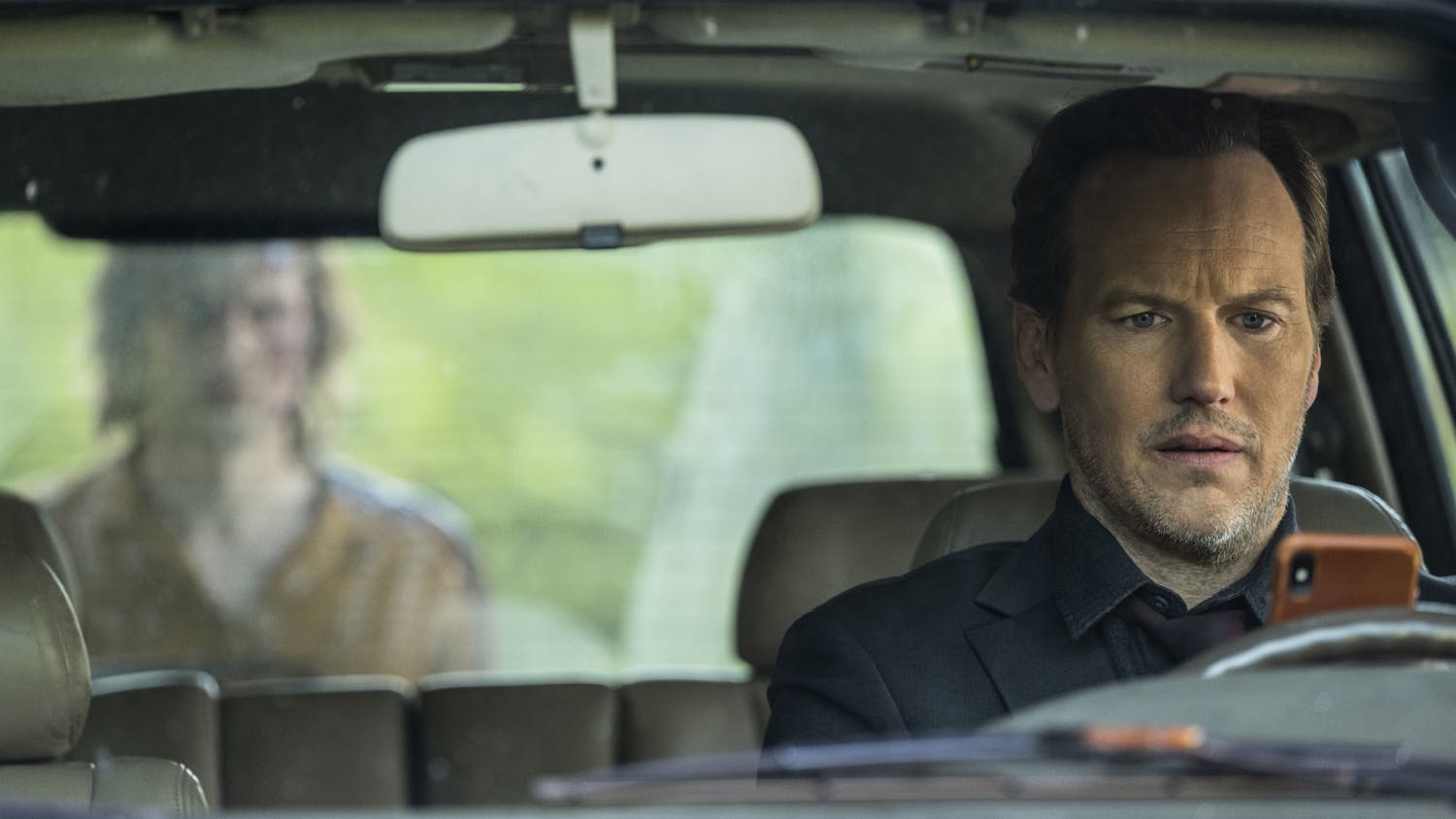
"Assassination Tango" is the third film written and directed by Robert Duvall following "Angelo My Love" (1983) and "The Apostle" (1997). It is a film that slowly envelops a cross-section of a life, eventually revealing that amid cultural chaos, personal strife and moral evil lies the overwhelming pull towards normalcy.\nSimilar to his Oscar-winning role in 1983's "Tender Mercies," Duvall displays a remarkable ease in his persona as aging hit man John J. Anderson. Unlike the quiet dignity he portrayed in the aforementioned film, "Assassination Tango" finds Duvall confused, meticulous, outgoing and mannered. His attention to detail in creating Anderson is astounding, unfortunately the character is so real that he is inevitably quite boring.\nAnderson, described by his ambiguously shady friends as "the best," works as a hit man in Latin parts of New York City. He also lives a double life with his longtime girlfriend (Kathy Baker) and her ten-year-old daughter, lying about his profession as all the movie point guys must. The film mainly follows Anderson around Buenos Aires, where he is sent to assassinate an old Argentinean general.\nWhile there, he keeps to himself, choosing to handle things on his own in favor of using given contacts. Stumbling upon a pair of tango dancers in a swank, dimly lit club, Anderson finds himself intrigued by the female dancer, Manuela (Luciana Pedraza). He sparks up a relationship with her that is not explicitly sexual, but rather fatherly. She teaches him to tango and talks to him in a rather drawn out, non-dramatic fashion. Ultimately, like the tango and all things in their lives, the association feels guarded and crafted.\nDespite a few ostentatious moments (such as all of the lengthy tango montages), Duvall is able to get his ideas across effectively. All gun-fighting action takes place in less than 10 minutes of this two hour-plus movie, and little explanation of its coming is given. Instead, the focus is Duvall's character sketch, which is certainly complex and authentic, but never over the top. The evil is not so evil, his generosity is two-sided and his tics and expressions are common.\nThe concepts in "Assassination Tango" have depth, but as entertainment it's dull. Brilliant filmmakers like David Lynch have found ways to achieve the best of both worlds, and by comparison Duvall's voyeuristic art feels novice.
Duvall tangos the night away
('Assassination Tango' -- R)
Get stories like this in your inbox
Subscribe