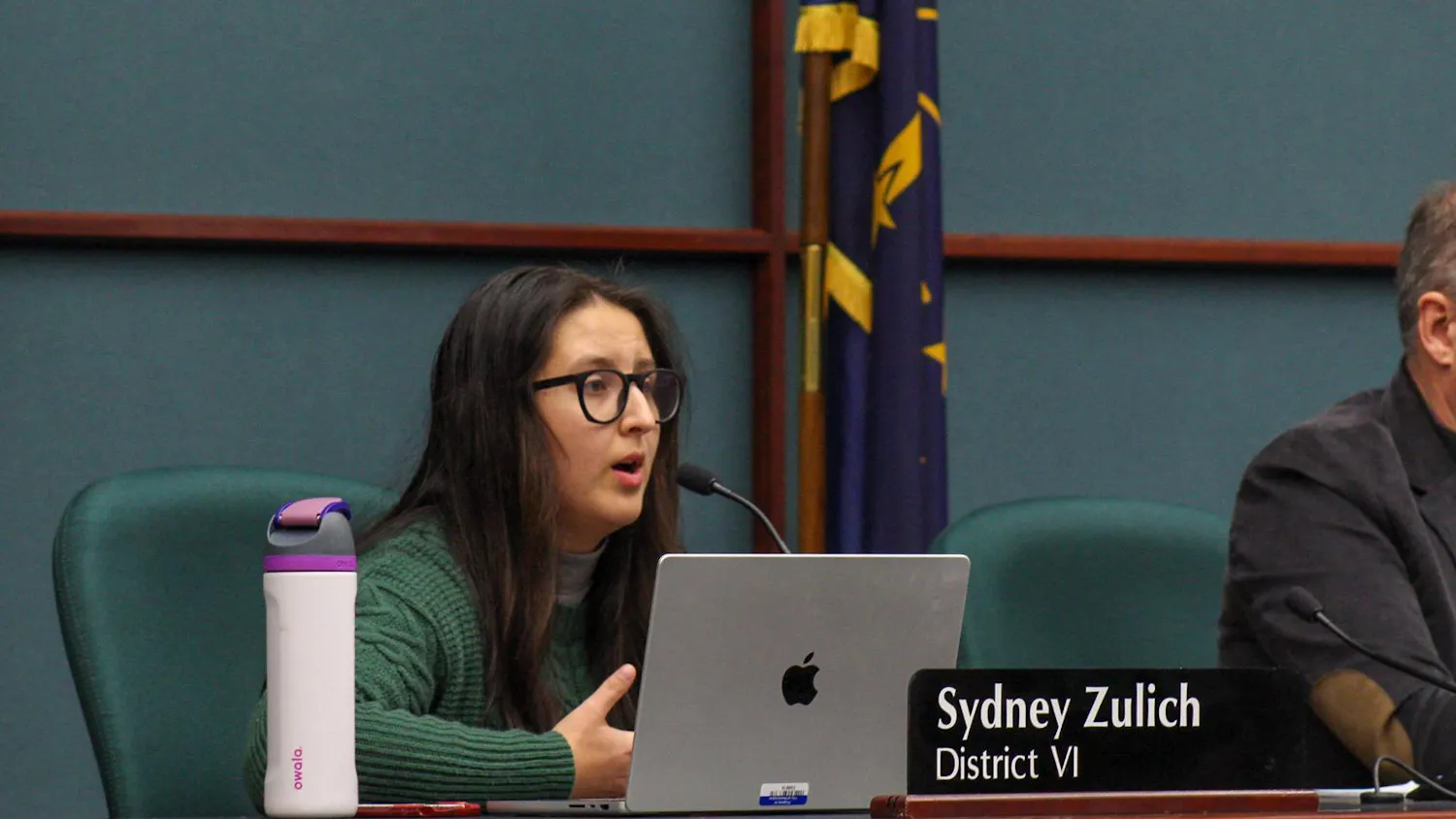
Former bandmates Jay Farrar and Jeff Tweedy have proved to be two of the most volatile personalities in popular music these days. First, they couldn't get along together in Uncle Tupelo, forcing that band's breakup. Now, almost every original band member has left Tweedy's new group Wilco. Jay Farrar's Son Volt is on hiatus now, and he refuses to give a definite answer about the future of that group. \nFarrar, on his first tour as a solo act, marched into the Bluebird Tuesday night in support of his first solo album "Sebastopol." The album, which came out in late September, shows a growth in Farrar's instrumental approach. That growth reflects the growing brilliance of his former bandmate Tweedy. But where Tweedy is leading Wilco out of the alternative-country music that defined Uncle Tupelo and into a progressive pop format, Farrar is still reveling in the dried up "No Depression" movement. \nFarrar's opening act was Anders Parker from Varnaline. Parker played a 45-minute set that would have been more enjoyable had he passed out pillows and blankets beforehand. \nHe tried to attain the laziness of Neil Young in lulling the crowd by strumming his acoustic guitar and singing introspective lyrics. But his music neither showed conviction nor held interest like anything of Young's could. While he tried a feedback freakout near the middle of his set, it was only rousing because of its volume. It sounded like Parker was trying to make a song out of Lou Reed's Metal Machine Music -- which Reed himself has proved is quite pointless. \nFor an hour and a half, Farrar performed a set mostly of his new solo material. He slipped in a few Uncle Tupelo and Son Volt tunes to keep the small crowd at the Bluebird happy. Farrar didn't say much, mumbling a few times into the microphone in case he was playing a song that he thought the crowd wouldn't know. He was playing the disturbed artist bit he has become associated with as well as he could. \nFarrar brought multi-instrumentalist Mark Spencer to accompany him. Spencer displayed a remarkable talent on keyboards and guitar, but he really showed himself as a considerable talent with his tremendous lap-steel work.\nFarrar seemed to lack the intimacy to give such a sparse performance. His voice is a powerful instrument, but it is abrasive and unwavering and also lacks the clarity needed in a solo performance. \nHis songs are filled with post-Apocalyptic visions and musings on the Old West. As he sang on "Barstow," "they'll be digging through our landfills, to find evidence of our great demise." This is a subject that seems to be popular these days within the alternative country songwriter movement. Although the preoccupation with the decline of the Old West and modernization has actually been popular since Bob Dylan introduced beat poetry and writing to rock and roll.\nBut Dylan didn't dwell on modernization and it's possible that he never treated it with anathema the way Farrar does. This is an interesting deterrent to Farrar's progress -- is it possible to be stuck in the past and progress at the same time? His former bandmate Jeff Tweedy didn't think so. After re-evaluating Wilco's position, he decided that they should progress into high-end pop music. Wilco took off after this, releasing three albums in a row ("Being There," "Summer Teeth" and "Yankee Foxtrot Hotel") that grew in denseness, complexity and brilliance.\nWhile it's really not fair to compare Farrar to Tweedy, they do have the same timeline. Farrar's post-Uncle Tupelo work has paled in comparison to Tweedy's. It is also notable that most critics thought Farrar to be the superior talent.\nMaybe Farrar has accepted the limitations of country music, but think of it this way: What if the Beatles had stayed a bar band, or Dylan didn't go electric, or Miles Davis didn't embrace rock? It is the chances that artists take that make them great, and Farrar is not taking any chances.
Singer/songwriter not taking risks
Farrar's solo debut leaves fans desiring a little change
Get stories like this in your inbox
Subscribe